Thinkers and political figures
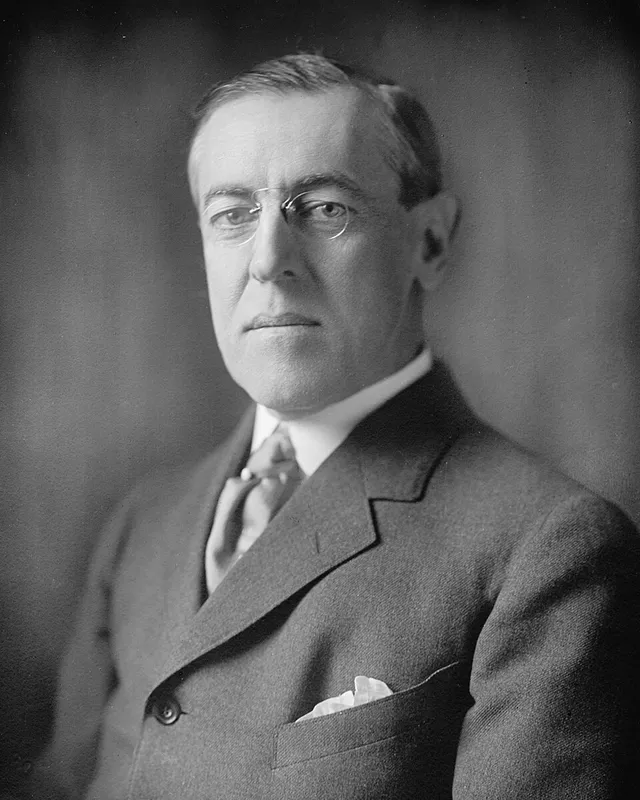
Portrait: Harris & Ewing, via Wikimedia Commons (opens in a new tab) · Public domain
Woodrow Wilson
- Country
- United States
- Era
- 1856–1924
- Tradition
- Progressive liberalism, liberal internationalism
President who built the Federal Reserve and the modern regulatory state, took America into the First World War on a programme of national self-determination and collective security — and imposed racial segregation across the federal civil service.
Documented positions
Documented positions come from the sources listed. Similarity is this project’s inference from those positions, and is a much weaker claim.
- Created the Federal Reserve System, the Federal Trade Commission and the first federal income tax under the Sixteenth Amendment
- Set out the Fourteen Points, making national self-determination and open diplomacy the basis of the post-war settlement
- Proposed and campaigned for the League of Nations, which the Senate refused to join
- Signed the Clayton Antitrust Act, exempting unions from antitrust prosecution, and the first federal child labour law
- Introduced racial segregation across federal departments and dismissed Black civil servants
- Signed the Espionage and Sedition Acts, under which critics of the war were imprisoned
Where it sits on each dimension
Wealth and inequality
Evidence: Well documented
The state in the economy
Evidence: Well documented
Personal liberty
Evidence: Well documented
Tradition and change
Evidence: Well documented
Nation and the world
Evidence: Well documented
Religion and the state
Evidence: Documented
Power and its limits
Evidence: Documented
Dimensions left unscored, for want of evidence: Environment and growth, Crime and punishment
Sources
- Woodrow Wilson, Address to Congress: The Fourteen Points · 1918
- John Milton Cooper Jr., Woodrow Wilson: A Biography · Knopf · 2009
Last verified: