Thinkers and political figures
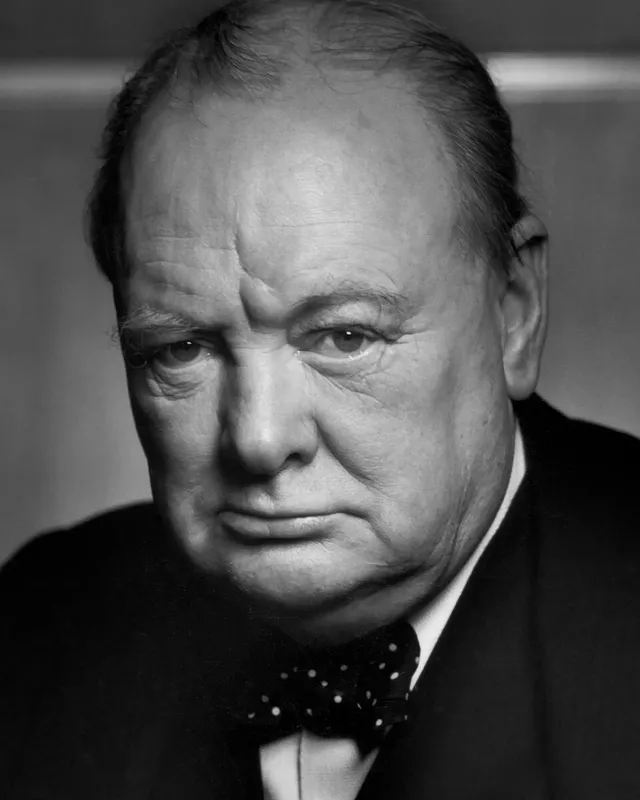
Portrait: Via Wikimedia Commons (opens in a new tab) · Public domain
Winston Churchill
- Country
- United Kingdom
- Era
- 1874–1965
- Tradition
- Conservatism, imperial nationalism
Prime Minister during the Second World War, who refused a negotiated peace with Nazi Germany — and who defended the British Empire and opposed Indian independence throughout his career.
01
Documented positions
Documented positions come from the sources listed. Similarity is this project’s inference from those positions, and is a much weaker claim.
- Refusal to negotiate with Nazi Germany in 1940 and prosecution of the war to unconditional surrender
- Early advocate of social insurance as a Liberal minister before 1914
- Consistent opposition to Indian self-government, including the Government of India Act 1935
- Warned against Soviet expansion in the "Iron Curtain" speech (1946)
- Defence of the British Empire as a permanent good
02
Where it sits on each dimension
Wealth and inequality
66
RedistributionMarket outcomes
Evidence: Documented
The state in the economy
58
Active stateLimited state
Evidence: Documented
Personal liberty
52
Collective orderIndividual freedom
Evidence: Documented
Tradition and change
20
ContinuityReform
Evidence: Well documented
Nation and the world
88
InternationalistNationalist
Evidence: Well documented
Power and its limits
60
Concentrated authorityChecks and pluralism
Evidence: Documented
Dimensions left unscored, for want of evidence: Environment and growth, Crime and punishment, Religion and the state
Sources
- Speeches in the House of Commons, 1940–1945 · Hansard
- The Sinews of Peace (Iron Curtain speech) · 1946
- Richard Toye, Churchill’s Empire · 2010
Last verified: