Thinkers and political figures
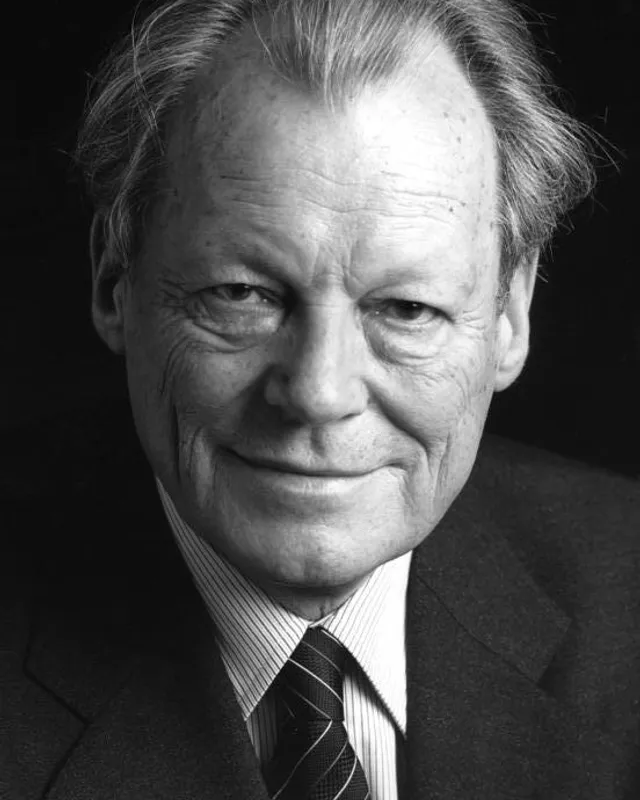
Portrait: Bundesarchiv, via Wikimedia Commons (opens in a new tab) · Creative Commons Attribution-ShareAlike 3.0 Germany
Willy Brandt
- Country
- West Germany
- Era
- 1913–1992
- Tradition
- Social democracy
Resistance exile who became chancellor and transformed West German foreign policy through Ostpolitik — opening relations with the East and kneeling at the Warsaw Ghetto memorial in an unscripted act of atonement.
Documented positions
Documented positions come from the sources listed. Similarity is this project’s inference from those positions, and is a much weaker claim.
- Pursued Ostpolitik, normalising relations with the Soviet Union, Poland and East Germany
- Recognised the Oder–Neisse line as Poland’s western border, abandoning German claims to lost territory
- Knelt at the Warsaw Ghetto Uprising memorial in 1970 in an unplanned gesture of penance
- Expanded the welfare state, raised pensions, and lowered the voting age to eighteen
- Extended codetermination, giving workers representation on company supervisory boards
- Chaired the Brandt Commission, arguing that rich countries had obligations of development to poor ones
- Introduced the Radikalenerlass barring political radicals from public employment, which he later regretted
Where it sits on each dimension
Wealth and inequality
Evidence: Well documented
The state in the economy
Evidence: Well documented
Personal liberty
Evidence: Documented
Tradition and change
Evidence: Well documented
Nation and the world
Evidence: Well documented
Power and its limits
Evidence: Well documented
Dimensions left unscored, for want of evidence: Religion and the state, Environment and growth, Crime and punishment
Sources
- Willy Brandt, My Life in Politics · 1992
- Peter Merseburger, Willy Brandt: Visionär und Realist · DVA · 2002
Last verified: