Thinkers and political figures
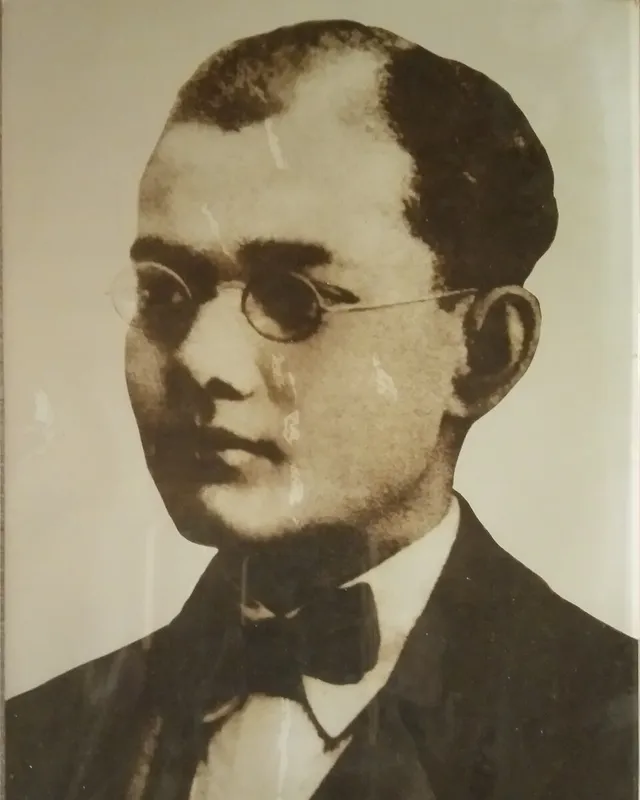
Portrait: Photograph, Cambridge, 1919, via Wikimedia Commons (opens in a new tab) · Public domain
Subhas Chandra Bose
- Country
- India
- Era
- 1897–1945
- Tradition
- Revolutionary nationalism, authoritarian socialism
Congress president turned armed revolutionary, who rejected Gandhi’s non-violence, sought Axis assistance during the Second World War, and led the Indian National Army against British rule.
01
Documented positions
Documented positions come from the sources listed. Similarity is this project’s inference from those positions, and is a much weaker claim.
- Complete independence immediately, rejecting dominion status or negotiated transfer
- Broke with Gandhi over non-violence, holding that British rule would not end by moral pressure alone
- Formed the Azad Hind provisional government and led the Indian National Army from 1943
- Advocated a period of authoritarian rule and state-led industrial planning after independence
- Insisted on a religiously inclusive nationalism, with mixed Hindu, Muslim and Sikh units in the INA
- Recruited women into armed service through the Rani of Jhansi Regiment
02
Where it sits on each dimension
Wealth and inequality
24
RedistributionMarket outcomes
Evidence: Documented
The state in the economy
20
Active stateLimited state
Evidence: Documented
Personal liberty
30
Collective orderIndividual freedom
Evidence: Documented
Tradition and change
66
ContinuityReform
Evidence: Documented
Nation and the world
94
InternationalistNationalist
Evidence: Well documented
Religion and the state
26
Secular stateReligion in public life
Evidence: Well documented
Power and its limits
22
Concentrated authorityChecks and pluralism
Evidence: Documented
Dimensions left unscored, for want of evidence: Environment and growth, Crime and punishment
Sources
- Subhas Chandra Bose, The Indian Struggle, 1920–1942 · 1948
- Sugata Bose, His Majesty’s Opponent: Subhas Chandra Bose and India’s Struggle against Empire · Harvard University Press · 2011
Last verified: