Thinkers and political figures
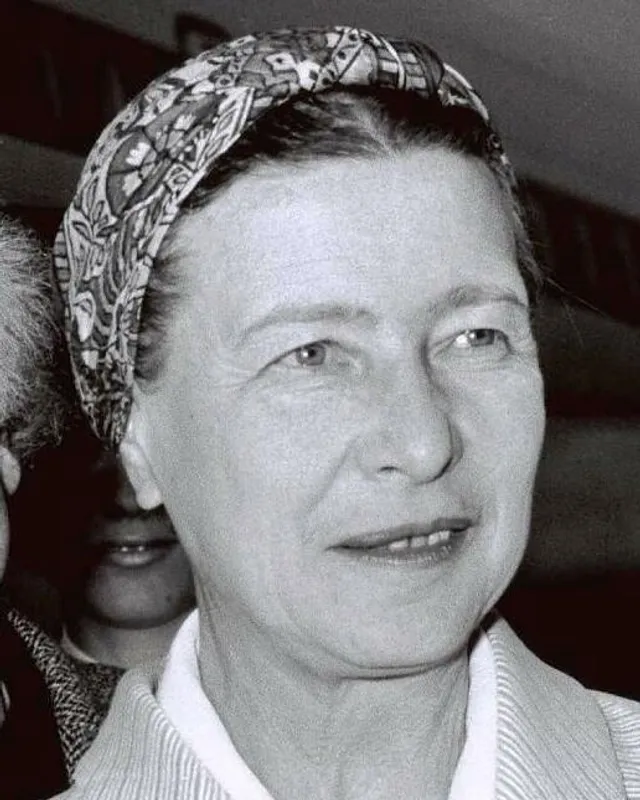
Portrait: Photograph, via Wikimedia Commons (opens in a new tab) · Creative Commons Attribution-ShareAlike 3.0
Simone de Beauvoir
- Country
- France
- Era
- 1908–1986
- Tradition
- Existentialist feminism
Philosopher whose argument that women are made rather than born — that femininity is a social construction imposed on them — set the terms for second-wave feminism worldwide.
01
Documented positions
Documented positions come from the sources listed. Similarity is this project’s inference from those positions, and is a much weaker claim.
- Argued that women are constructed as "the Other" against which man is defined as the human norm
- Held that femininity is produced by upbringing and social expectation rather than given by biology
- Campaigned for the legalisation of abortion in France and signed the 1971 manifesto declaring she had had one
- Argued that economic independence through work is a precondition of women’s freedom
- Supported Algerian independence and publicly opposed the French use of torture
- Held that marriage as then constituted was an institution of dependence and should be transformed
02
Where it sits on each dimension
Wealth and inequality
18
RedistributionMarket outcomes
Evidence: Documented
The state in the economy
25
Active stateLimited state
Evidence: Documented
Personal liberty
86
Collective orderIndividual freedom
Evidence: Well documented
Tradition and change
96
ContinuityReform
Evidence: Well documented
Nation and the world
20
InternationalistNationalist
Evidence: Documented
Religion and the state
4
Secular stateReligion in public life
Evidence: Well documented
Power and its limits
68
Concentrated authorityChecks and pluralism
Evidence: Documented
Dimensions left unscored, for want of evidence: Environment and growth, Crime and punishment
Sources
- Simone de Beauvoir, The Second Sex · 1949
- Simone de Beauvoir, The Ethics of Ambiguity · 1947
Last verified: