Thinkers and political figures
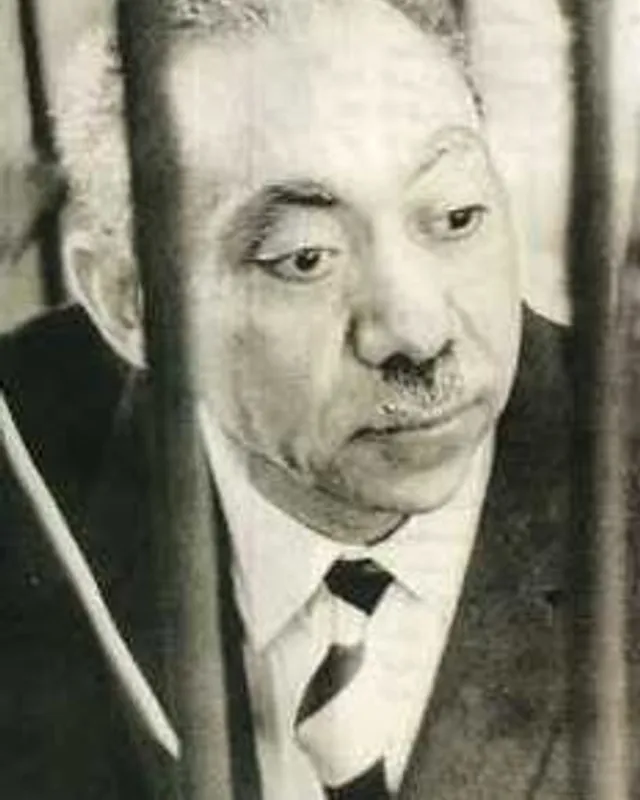
Portrait: Photograph, via Wikimedia Commons (opens in a new tab) · Public domain
Sayyid Qutb
- Country
- Egypt
- Era
- 1906–1966
- Tradition
- Islamism
Egyptian writer whose prison works argued that existing Muslim societies had lapsed into pre-Islamic ignorance and that a vanguard should establish God’s sovereignty — the founding text of modern revolutionary Islamism.
01
Documented positions
Documented positions come from the sources listed. Similarity is this project’s inference from those positions, and is a much weaker claim.
- Held that sovereignty belongs to God alone, and that man-made law is therefore illegitimate
- Argued that contemporary Muslim societies had reverted to jahiliyyah — the ignorance preceding Islam
- Called for a vanguard of committed believers to establish Islamic governance
- Rejected both Western liberal capitalism and Soviet communism as materialist systems that ignore the spiritual
- Advocated economic arrangements based on zakat and limits on accumulation rather than either socialism or free markets
- Was tried and executed by Nasser’s government in 1966 for conspiring against the state
02
Where it sits on each dimension
Wealth and inequality
35
RedistributionMarket outcomes
Evidence: Documented
Personal liberty
4
Collective orderIndividual freedom
Evidence: Well documented
Tradition and change
6
ContinuityReform
Evidence: Well documented
Nation and the world
45
InternationalistNationalist
Evidence: Documented
Religion and the state
99
Secular stateReligion in public life
Evidence: Well documented
Power and its limits
6
Concentrated authorityChecks and pluralism
Evidence: Well documented
Crime and punishment
10
PunishmentRehabilitation
Evidence: Documented
Dimensions left unscored, for want of evidence: The state in the economy, Environment and growth
Sources
- Sayyid Qutb, Milestones · 1964
- John Calvert, Sayyid Qutb and the Origins of Radical Islamism · Hurst · 2010
Last verified: