Thinkers and political figures
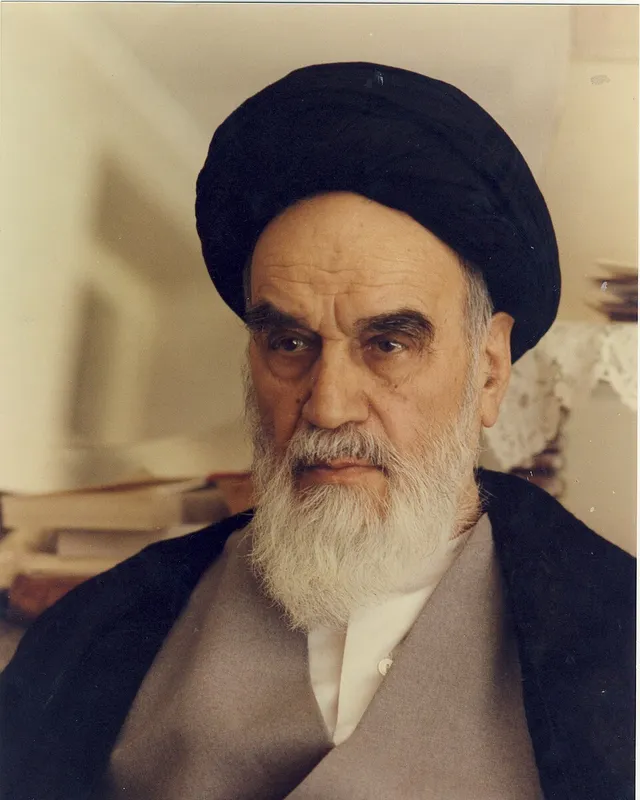
Portrait: Photograph, via Wikimedia Commons (opens in a new tab) · Public domain
Ruhollah Khomeini
- Country
- Iran
- Era
- 1902–1989
- Tradition
- Islamic republicanism, clerical rule
Cleric who led the 1979 revolution that overthrew the Shah and founded the Islamic Republic, translating the doctrine of guardianship of the jurist into a functioning state with a clerical supreme leader above elected institutions.
Documented positions
Documented positions come from the sources listed. Similarity is this project’s inference from those positions, and is a much weaker claim.
- Formulated velayat-e faqih, the doctrine that a qualified jurist should hold ultimate political authority
- Built a constitution combining elected president and parliament with a clerical Supreme Leader and Guardian Council above them
- Made Islamic law the basis of the legal code, including compulsory hijab and restrictions on women’s legal standing
- Framed Iran’s foreign policy as "neither East nor West", rejecting both American and Soviet alignment
- Supported the export of the revolution and support for Islamist movements abroad
- Nationalised major industries and banks while retaining substantial private commerce
- Ordered mass executions of imprisoned political opponents in 1988
Where it sits on each dimension
Wealth and inequality
Evidence: Documented
The state in the economy
Evidence: Documented
Personal liberty
Evidence: Well documented
Tradition and change
Evidence: Well documented
Nation and the world
Evidence: Well documented
Religion and the state
Evidence: Well documented
Power and its limits
Evidence: Well documented
Crime and punishment
Evidence: Well documented
Dimensions left unscored, for want of evidence: Environment and growth
Sources
- Ruhollah Khomeini, Islamic Government: Governance of the Jurist · 1970
- Baqer Moin, Khomeini: Life of the Ayatollah · I.B. Tauris · 1999
Last verified: