Thinkers and political figures
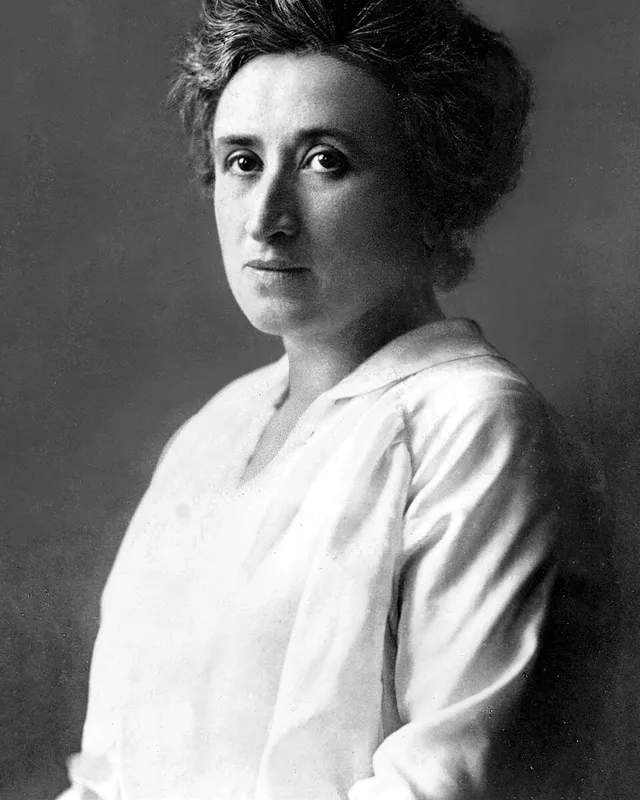
Portrait: Via Wikimedia Commons (opens in a new tab) · Public domain
Rosa Luxemburg
- Country
- Poland and Germany
- Era
- 1871–1919
- Tradition
- Democratic socialism
A revolutionary socialist who nonetheless insisted that socialism without political freedom would become a new bureaucratic dictatorship — a criticism she directed at the Bolsheviks in 1918.
01
Documented positions
Documented positions come from the sources listed. Similarity is this project’s inference from those positions, and is a much weaker claim.
- Freedom is always the freedom of the one who thinks differently (The Russian Revolution, 1918)
- Criticised the Bolsheviks for suppressing elections, press freedom and internal dissent
- Argued against Bernstein that reform alone could not achieve socialism (Reform or Revolution, 1900)
- Opposed the First World War and internationalist against national mobilisation
02
Where it sits on each dimension
Wealth and inequality
6
RedistributionMarket outcomes
Evidence: Well documented
The state in the economy
20
Active stateLimited state
Evidence: Documented
Personal liberty
78
Collective orderIndividual freedom
Evidence: Well documented
Tradition and change
86
ContinuityReform
Evidence: Documented
Nation and the world
6
InternationalistNationalist
Evidence: Well documented
Power and its limits
78
Concentrated authorityChecks and pluralism
Evidence: Well documented
Dimensions left unscored, for want of evidence: Environment and growth, Crime and punishment, Religion and the state
Sources
- Rosa Luxemburg, Reform or Revolution · 1900
- Rosa Luxemburg, The Russian Revolution · 1918
Last verified: