Thinkers and political figures
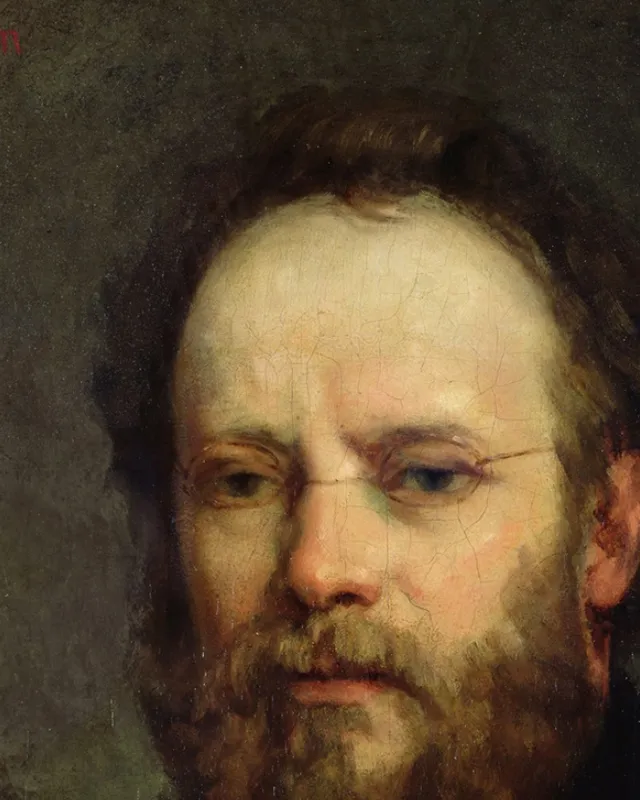
Portrait: Gustave Courbet, via Wikimedia Commons (opens in a new tab) · Public domain
Pierre-Joseph Proudhon
- Country
- France
- Era
- 1809–1865
- Tradition
- Mutualist anarchism
The first person to call himself an anarchist, who argued that property acquired without labour is theft while property worked by its owner is the basis of liberty.
01
Documented positions
Documented positions come from the sources listed. Similarity is this project’s inference from those positions, and is a much weaker claim.
- Argued that property derived from rent, interest and profit is theft, while possession of what one works is legitimate
- Proposed mutualism: worker-owned enterprises exchanging goods at cost through a people’s bank offering interest-free credit
- Opposed both state socialism and laissez-faire capitalism as different forms of domination
- Favoured federation of communes and regions over the centralised nation-state
- Held reactionary views on women’s place in society, which he stated explicitly and which are recorded here as his
- Rejected revolutionary seizure of the state, favouring the gradual growth of mutual institutions alongside it
02
Where it sits on each dimension
Wealth and inequality
22
RedistributionMarket outcomes
Evidence: Documented
The state in the economy
58
Active stateLimited state
Evidence: Documented
Personal liberty
82
Collective orderIndividual freedom
Evidence: Well documented
Tradition and change
30
ContinuityReform
Evidence: Documented
Nation and the world
30
InternationalistNationalist
Evidence: Documented
Religion and the state
15
Secular stateReligion in public life
Evidence: Documented
Power and its limits
62
Concentrated authorityChecks and pluralism
Evidence: Documented
Dimensions left unscored, for want of evidence: Environment and growth, Crime and punishment
Sources
- Pierre-Joseph Proudhon, What Is Property? · 1840
- Pierre-Joseph Proudhon, The Principle of Federation · 1863
Last verified: