Thinkers and political figures
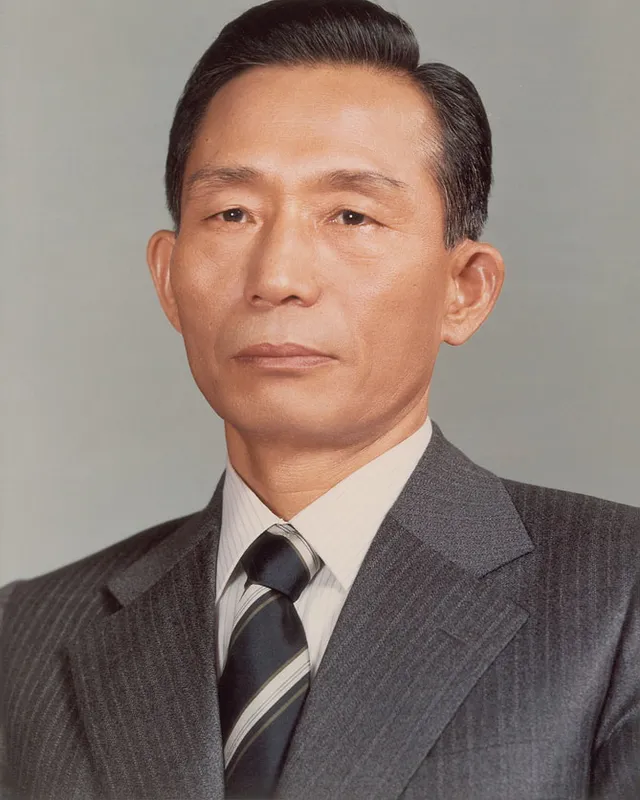
Portrait: Government of the Republic of Korea, via Wikimedia Commons (opens in a new tab) · Creative Commons Attribution-ShareAlike 2.0
Park Chung-hee
- Country
- South Korea
- Era
- 1917–1979
- Tradition
- Developmental authoritarianism
General who seized power in a coup and drove South Korea from one of the world’s poorest countries to an industrial economy in eighteen years, under a constitution that made him president for life until his own intelligence chief shot him.
Documented positions
Documented positions come from the sources listed. Similarity is this project’s inference from those positions, and is a much weaker claim.
- Directed state-led industrialisation through five-year plans, directed credit and export targets for the chaebol conglomerates
- Normalised relations with Japan in 1965 in exchange for reparations that financed industrial investment
- Imposed the Yushin Constitution in 1972, giving himself indefinite terms and the power to appoint a third of the legislature
- Suppressed labour organising and held wages down as a deliberate component of export competitiveness
- Launched the Saemaul Undong rural modernisation movement
- Sent South Korean troops to Vietnam in exchange for American economic and military assistance
- Used the Korean CIA to detain, torture and imprison political opponents
Where it sits on each dimension
Wealth and inequality
Evidence: Documented
The state in the economy
Evidence: Well documented
Personal liberty
Evidence: Well documented
Tradition and change
Evidence: Documented
Nation and the world
Evidence: Well documented
Power and its limits
Evidence: Well documented
Environment and growth
Evidence: Documented
Crime and punishment
Evidence: Documented
Dimensions left unscored, for want of evidence: Religion and the state
Sources
- Park Chung-hee, Our Nation’s Path · 1962
- Byung-Kook Kim and Ezra F. Vogel, The Park Chung Hee Era · Harvard University Press · 2011
Last verified: