Thinkers and political figures
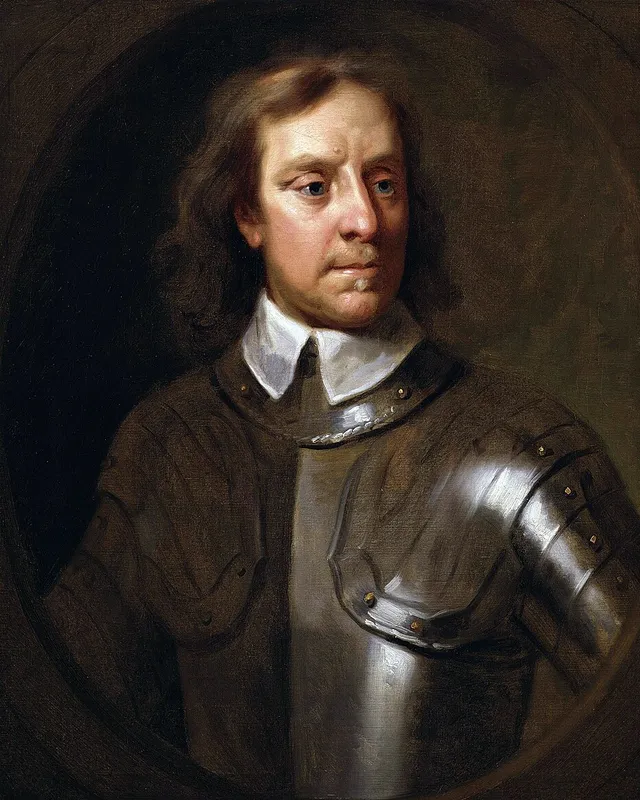
Portrait: Samuel Cooper, via Wikimedia Commons (opens in a new tab) · Public domain
Oliver Cromwell
- Country
- England
- Era
- 1599–1658
- Tradition
- Puritan republicanism
Parliamentary commander who signed a king’s death warrant, abolished the monarchy, then dissolved parliament and ruled as Lord Protector — and whose campaign in Ireland is remembered there as a massacre.
01
Documented positions
Documented positions come from the sources listed. Similarity is this project’s inference from those positions, and is a much weaker claim.
- Signed the death warrant of Charles I in 1649 and abolished the monarchy and House of Lords
- Dissolved the Rump Parliament by force in 1653 and governed thereafter as Lord Protector under a written constitution
- Refused the crown when it was offered to him in 1657
- Permitted a broad Protestant religious toleration and readmitted Jews to England after 365 years
- Commanded the campaign in Ireland including the storming of Drogheda and Wexford, in which thousands were killed, and the mass confiscation of Catholic land
- Suppressed the Levellers, rejecting their demand for near-universal male suffrage
02
Where it sits on each dimension
Personal liberty
25
Collective orderIndividual freedom
Evidence: Documented
Tradition and change
40
ContinuityReform
Evidence: Documented
Nation and the world
78
InternationalistNationalist
Evidence: Well documented
Religion and the state
82
Secular stateReligion in public life
Evidence: Well documented
Power and its limits
20
Concentrated authorityChecks and pluralism
Evidence: Well documented
Crime and punishment
15
PunishmentRehabilitation
Evidence: Documented
Dimensions left unscored, for want of evidence: Wealth and inequality, The state in the economy, Environment and growth
Sources
- Oliver Cromwell, ed. W. C. Abbott, The Writings and Speeches of Oliver Cromwell · 1937
- John Morrill, Oliver Cromwell · Oxford University Press · 2007
Last verified: