Thinkers and political figures
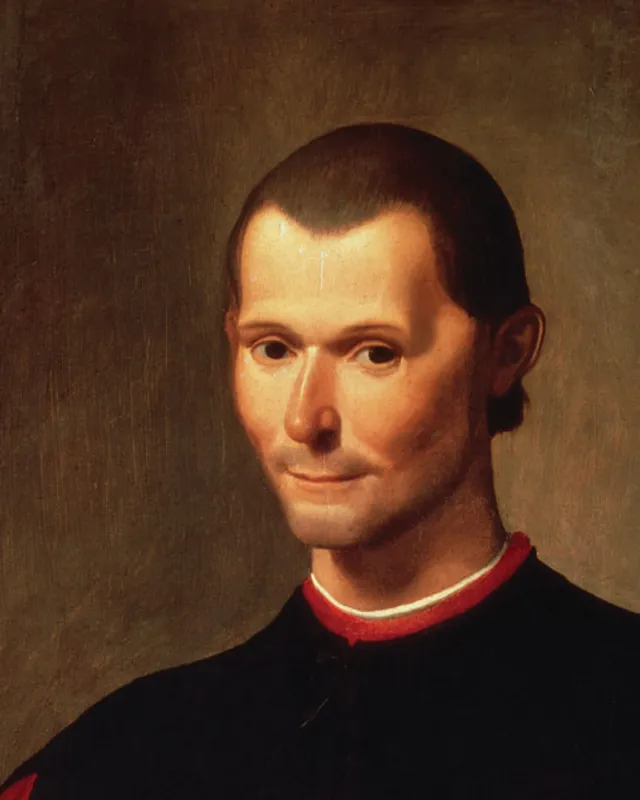
Portrait: Santi di Tito, via Wikimedia Commons (opens in a new tab) · Public domain
Niccolò Machiavelli
- Country
- Florence
- Era
- 1469–1527
- Tradition
- Republicanism, political realism
Florentine diplomat who separated the study of how power actually works from the question of how rulers ought to behave, and who argued in his less-read book that a republic with an armed citizenry is more durable than a principality.
01
Documented positions
Documented positions come from the sources listed. Similarity is this project’s inference from those positions, and is a much weaker claim.
- Held that a ruler must be willing to act against conventional morality when the survival of the state requires it
- Argued in the Discourses that republics outlast principalities because more people have a stake in them
- Favoured a citizen militia over mercenary armies, on the grounds that hired soldiers have no reason to die for you
- Treated conflict between social classes as a source of Roman strength rather than a disorder to be suppressed
- Regarded organised religion instrumentally, as a means of civic cohesion rather than a source of political authority
02
Where it sits on each dimension
Personal liberty
35
Collective orderIndividual freedom
Evidence: Documented
Nation and the world
78
InternationalistNationalist
Evidence: Documented
Religion and the state
30
Secular stateReligion in public life
Evidence: Documented
Power and its limits
45
Concentrated authorityChecks and pluralism
Evidence: Documented
Crime and punishment
18
PunishmentRehabilitation
Evidence: Documented
Dimensions left unscored, for want of evidence: Wealth and inequality, The state in the economy, Tradition and change, Environment and growth
Sources
- Niccolò Machiavelli, The Prince · 1532
- Niccolò Machiavelli, Discourses on Livy · 1531
- Quentin Skinner, Machiavelli: A Very Short Introduction · Oxford University Press · 2000
Last verified: