Thinkers and political figures
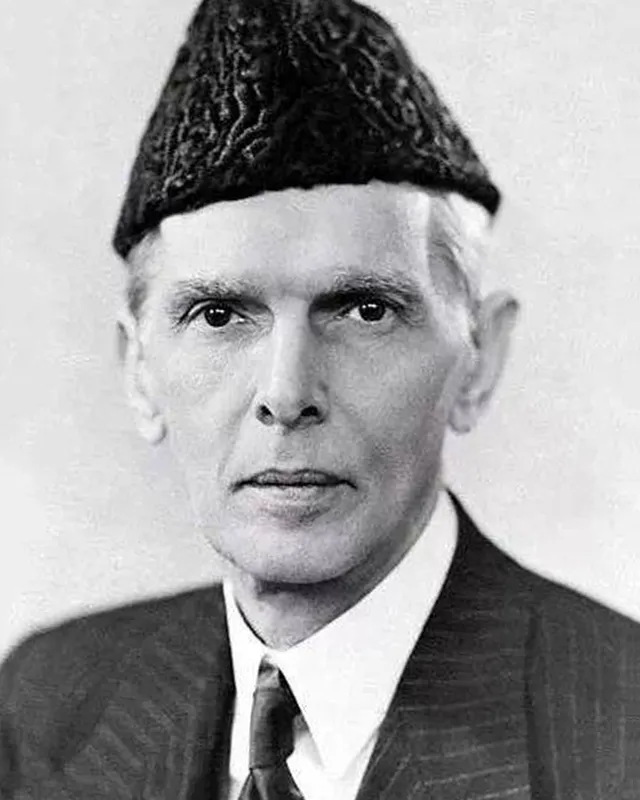
Portrait: Photograph, c. 1945, via Wikimedia Commons (opens in a new tab) · Public domain
Muhammad Ali Jinnah
- Country
- Pakistan
- Era
- 1876–1948
- Tradition
- Muslim nationalism, constitutional liberalism
Barrister who spent two decades as an advocate of Hindu–Muslim unity before concluding that Indian Muslims needed a separate state, and who founded Pakistan and governed it for its first thirteen months.
01
Documented positions
Documented positions come from the sources listed. Similarity is this project’s inference from those positions, and is a much weaker claim.
- Argued from 1940 that Indian Muslims constituted a nation entitled to their own state — the two-nation theory
- Spent his earlier career, until the late 1920s, working for constitutional guarantees for Muslims within a united India
- Insisted throughout on constitutional and legal methods rather than mass civil disobedience
- Told Pakistan’s constituent assembly in August 1947 that religion "has nothing to do with the business of the State" and that all citizens were equal
- Opposed Gandhi’s mixing of religious idiom with mass politics as a method
- Left the shape of Pakistan’s constitution and the role of Islamic law unsettled at his death
02
Where it sits on each dimension
Personal liberty
58
Collective orderIndividual freedom
Evidence: Documented
Tradition and change
62
ContinuityReform
Evidence: Documented
Nation and the world
88
InternationalistNationalist
Evidence: Well documented
Religion and the state
48
Secular stateReligion in public life
Evidence: Documented
Power and its limits
60
Concentrated authorityChecks and pluralism
Evidence: Documented
Dimensions left unscored, for want of evidence: Wealth and inequality, The state in the economy, Environment and growth, Crime and punishment
Sources
- Muhammad Ali Jinnah, Address to the Constituent Assembly of Pakistan, 11 August 1947 · 1947
- Stanley Wolpert, Jinnah of Pakistan · Oxford University Press · 1984
Last verified: