Thinkers and political figures
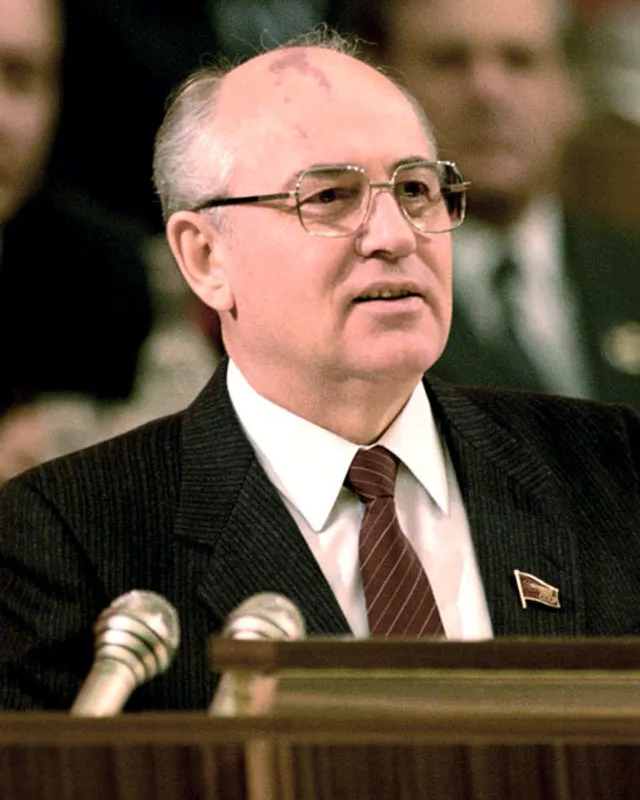
Portrait: RIA Novosti archive, via Wikimedia Commons (opens in a new tab) · Creative Commons Attribution-ShareAlike 3.0
Mikhail Gorbachev
- Country
- Soviet Union
- Era
- 1931–2022
- Tradition
- Reform communism, social democracy
Last leader of the Soviet Union, who tried to reform the system through openness and restructuring, refused to use force to hold Eastern Europe, and presided over the collapse of the state he was attempting to save.
Documented positions
Documented positions come from the sources listed. Similarity is this project’s inference from those positions, and is a much weaker claim.
- Introduced glasnost, ending most censorship and permitting open criticism of the Communist Party
- Introduced perestroika, allowing cooperatives, limited private enterprise and enterprise autonomy
- Ended the party’s constitutional monopoly on power and permitted contested elections in 1989
- Refused to intervene militarily as Eastern European communist governments fell in 1989
- Signed the INF Treaty eliminating an entire class of nuclear weapons, and withdrew from Afghanistan
- Opposed the dissolution of the Soviet Union and sought to replace it with a looser federal union
- Authorised force in Lithuania and Latvia in January 1991, in which civilians were killed
Where it sits on each dimension
Wealth and inequality
Evidence: Documented
The state in the economy
Evidence: Well documented
Personal liberty
Evidence: Well documented
Tradition and change
Evidence: Documented
Nation and the world
Evidence: Well documented
Power and its limits
Evidence: Well documented
Environment and growth
Evidence: Documented
Dimensions left unscored, for want of evidence: Religion and the state, Crime and punishment
Sources
- Mikhail Gorbachev, Perestroika: New Thinking for Our Country and the World · 1987
- William Taubman, Gorbachev: His Life and Times · Simon & Schuster · 2017
Last verified: