Thinkers and political figures
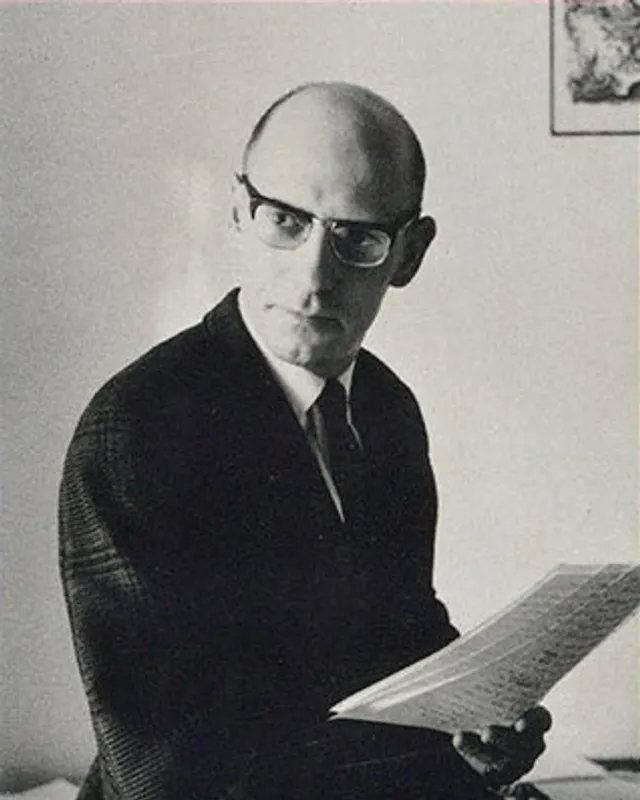
Portrait: Dust jacket photograph, 1970, via Wikimedia Commons (opens in a new tab) · Public domain
Michel Foucault
- Country
- France
- Era
- 1926–1984
- Tradition
- Post-structuralism
Historian of prisons, clinics and sexuality who argued that modern power works less by prohibition than by producing categories of normal and abnormal that people apply to themselves.
01
Documented positions
Documented positions come from the sources listed. Similarity is this project’s inference from those positions, and is a much weaker claim.
- Argued that modern power operates through surveillance, classification and self-discipline rather than mainly through prohibition
- Held that knowledge and power are inseparable, and that expert classification is itself an exercise of power
- Campaigned actively for prisoners’ rights through the Groupe d’information sur les prisons
- Rejected the idea that the prison reforms of the nineteenth century were straightforwardly humane progress
- Declined to offer a programme of what should replace existing institutions, holding that critique need not supply one
- Broke with the French Communist Party and remained sceptical of state socialism throughout his life
02
Where it sits on each dimension
Personal liberty
82
Collective orderIndividual freedom
Evidence: Well documented
Tradition and change
90
ContinuityReform
Evidence: Well documented
Religion and the state
8
Secular stateReligion in public life
Evidence: Documented
Crime and punishment
88
PunishmentRehabilitation
Evidence: Well documented
Dimensions left unscored, for want of evidence: Wealth and inequality, The state in the economy, Nation and the world, Power and its limits, Environment and growth
Sources
- Michel Foucault, Discipline and Punish: The Birth of the Prison · 1975
- Michel Foucault, The History of Sexuality, Volume 1 · 1976
Last verified: