Thinkers and political figures
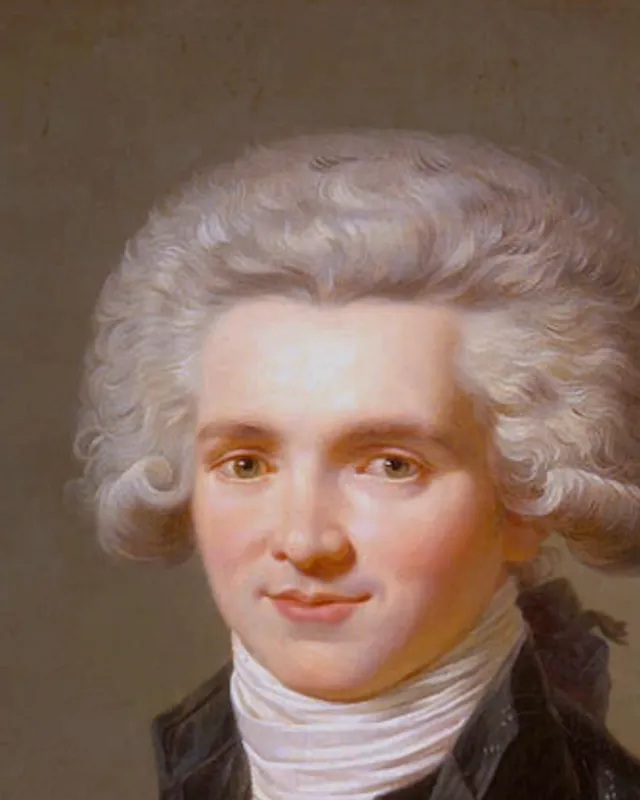
Portrait: Adélaïde Labille-Guiard, via Wikimedia Commons (opens in a new tab) · Public domain
Maximilien Robespierre
- Country
- France
- Era
- 1758–1794
- Tradition
- Jacobin republicanism
The most radical of the French revolutionary leaders, who argued for universal suffrage and against the death penalty before presiding over the Terror — and was executed by it.
01
Documented positions
Documented positions come from the sources listed. Similarity is this project’s inference from those positions, and is a much weaker claim.
- Universal male suffrage without property qualification, against the Constituent Assembly’s censitary system
- Opposed the death penalty in 1791, then defended revolutionary terror as "justice, prompt, severe, inflexible" in 1794
- Opposed the war of 1792 as a danger to the revolution itself
- Argued for price controls on grain and a right to subsistence above property rights
- Established the Cult of the Supreme Being as a civic religion
02
Where it sits on each dimension
Wealth and inequality
22
RedistributionMarket outcomes
Evidence: Documented
The state in the economy
24
Active stateLimited state
Evidence: Documented
Personal liberty
22
Collective orderIndividual freedom
Evidence: Well documented
Tradition and change
78
ContinuityReform
Evidence: Well documented
Nation and the world
66
InternationalistNationalist
Evidence: Documented
Religion and the state
44
Secular stateReligion in public life
Evidence: Documented
Power and its limits
30
Concentrated authorityChecks and pluralism
Evidence: Documented
Crime and punishment
16
PunishmentRehabilitation
Evidence: Well documented
Dimensions left unscored, for want of evidence: Environment and growth
Sources
- Maximilien Robespierre, Speeches to the National Convention · 1792–1794
- Peter McPhee, Robespierre: A Revolutionary Life · 2012
Last verified: