Thinkers and political figures
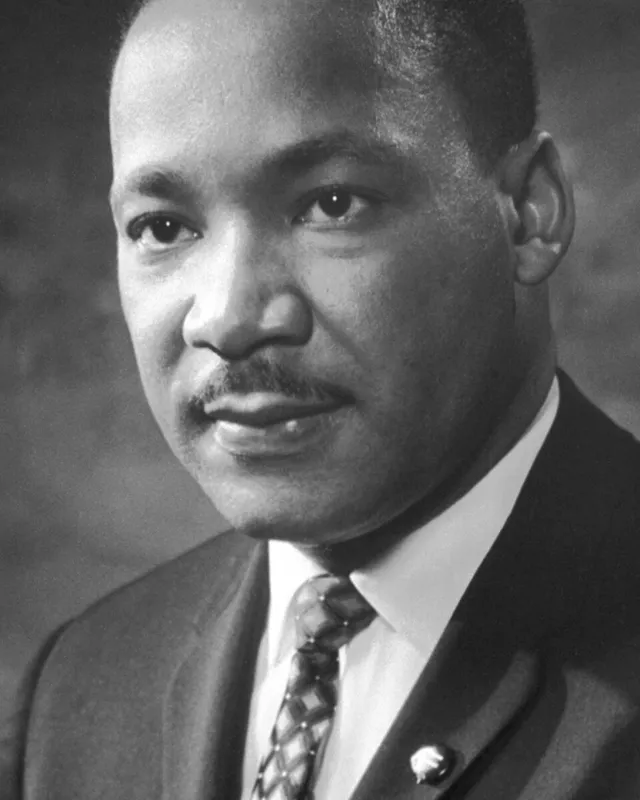
Portrait: Nobel Foundation, via Wikimedia Commons (opens in a new tab) · Public domain
Martin Luther King Jr.
- Country
- United States
- Era
- 1929–1968
- Tradition
- Social democracy, non-violent civil rights
Led the non-violent campaign against racial segregation in the United States, and in his final years linked it explicitly to economic redistribution and opposition to war.
01
Documented positions
Documented positions come from the sources listed. Similarity is this project’s inference from those positions, and is a much weaker claim.
- Non-violent direct action against legally enforced segregation
- Argued for a guaranteed annual income to abolish poverty (Where Do We Go From Here, 1967)
- Launched the Poor People’s Campaign for economic justice across racial lines
- Publicly opposed the Vietnam War in 1967, at significant political cost
- Defended civil disobedience against unjust laws (Letter from Birmingham Jail, 1963)
02
Where it sits on each dimension
Wealth and inequality
18
RedistributionMarket outcomes
Evidence: Well documented
The state in the economy
30
Active stateLimited state
Evidence: Documented
Personal liberty
82
Collective orderIndividual freedom
Evidence: Well documented
Tradition and change
92
ContinuityReform
Evidence: Well documented
Nation and the world
18
InternationalistNationalist
Evidence: Well documented
Religion and the state
58
Secular stateReligion in public life
Evidence: Well documented
Power and its limits
88
Concentrated authorityChecks and pluralism
Evidence: Well documented
Crime and punishment
86
PunishmentRehabilitation
Evidence: Well documented
Dimensions left unscored, for want of evidence: Environment and growth
Sources
- Martin Luther King Jr., Letter from Birmingham Jail · 1963
- Martin Luther King Jr., Where Do We Go From Here: Chaos or Community? · 1967
Last verified: