Thinkers and political figures
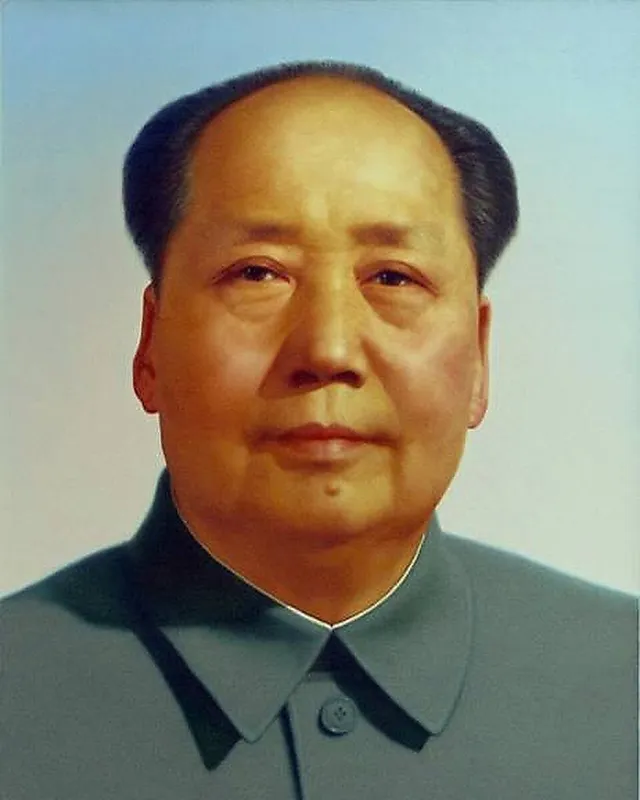
Portrait: Via Wikimedia Commons (opens in a new tab) · Public domain
Mao Zedong
- Country
- China
- Era
- 1893–1976
- Tradition
- Marxism-Leninism
Led the Chinese Communist Party to power in 1949 and governed a one-party state through collectivisation, the Great Leap Forward and the Cultural Revolution.
01
Documented positions
Documented positions come from the sources listed. Similarity is this project’s inference from those positions, and is a much weaker claim.
- Peasant-based revolution as the route to communism in an agrarian society
- Collectivisation of agriculture and comprehensive state ownership of industry
- One-party rule with no independent press, courts or opposition
- Mass mobilisation campaigns against designated internal enemies
02
Where it sits on each dimension
Wealth and inequality
2
RedistributionMarket outcomes
Evidence: Well documented
The state in the economy
4
Active stateLimited state
Evidence: Well documented
Personal liberty
5
Collective orderIndividual freedom
Evidence: Well documented
Tradition and change
70
ContinuityReform
Evidence: Documented
Nation and the world
62
InternationalistNationalist
Evidence: Well documented
Religion and the state
4
Secular stateReligion in public life
Evidence: Well documented
Power and its limits
3
Concentrated authorityChecks and pluralism
Evidence: Well documented
Environment and growth
25
Production firstProtection first
Evidence: Documented
Crime and punishment
8
PunishmentRehabilitation
Evidence: Well documented
Sources
- Frank Dikötter, Mao's Great Famine · Bloomsbury · 2010
- Roderick MacFarquhar and Michael Schoenhals, Mao's Last Revolution · Harvard University Press · 2006
Last verified: