Thinkers and political figures
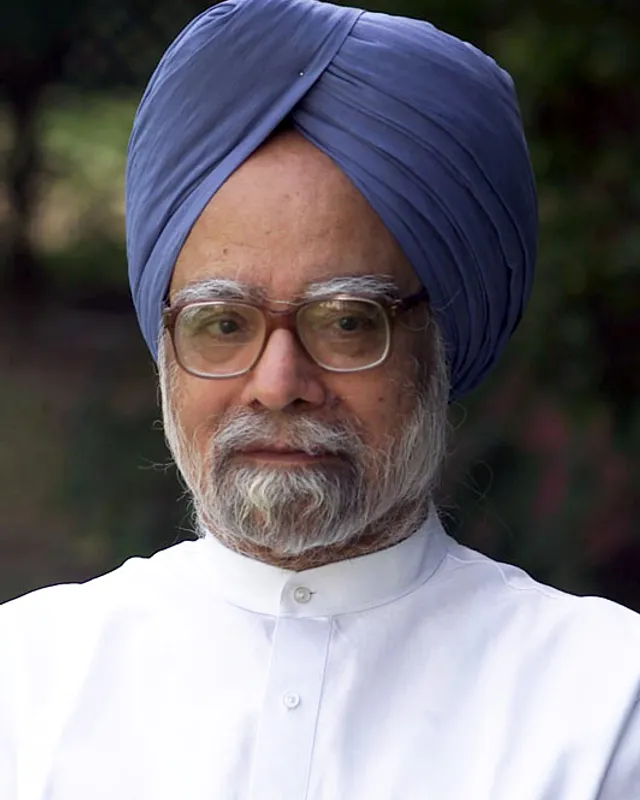
Portrait: Government of India, via Wikimedia Commons (opens in a new tab) · Government Open Data Licence – India
Manmohan Singh
- Country
- India
- Era
- 1932–2024
- Tradition
- Economic liberalism, social democracy
Economist who as finance minister dismantled India’s licence system in 1991 and as prime minister for a decade paired continued market opening with the largest rights-based welfare programmes in Indian history.
Documented positions
Documented positions come from the sources listed. Similarity is this project’s inference from those positions, and is a much weaker claim.
- Dismantled industrial licensing, cut tariffs and devalued the rupee in the 1991 reforms that opened the Indian economy
- Presided over the rural employment guarantee, the Right to Information Act, the Right to Education and the Forest Rights Act
- Concluded the civil nuclear agreement with the United States over strong parliamentary opposition
- Maintained public ownership of major banks while opening most sectors to private and foreign investment
- Supported caste-based reservations in higher education while arguing growth was the main route out of poverty
- Pursued normalisation with Pakistan and continued engagement with China despite border disputes
Where it sits on each dimension
Wealth and inequality
Evidence: Well documented
The state in the economy
Evidence: Well documented
Personal liberty
Evidence: Documented
Tradition and change
Evidence: Well documented
Nation and the world
Evidence: Well documented
Religion and the state
Evidence: Well documented
Power and its limits
Evidence: Well documented
Environment and growth
Evidence: Documented
Dimensions left unscored, for want of evidence: Crime and punishment
Sources
- Manmohan Singh, Budget Speech, 24 July 1991 · 1991
- Sanjaya Baru, The Accidental Prime Minister · Penguin · 2014
Last verified: