Thinkers and political figures
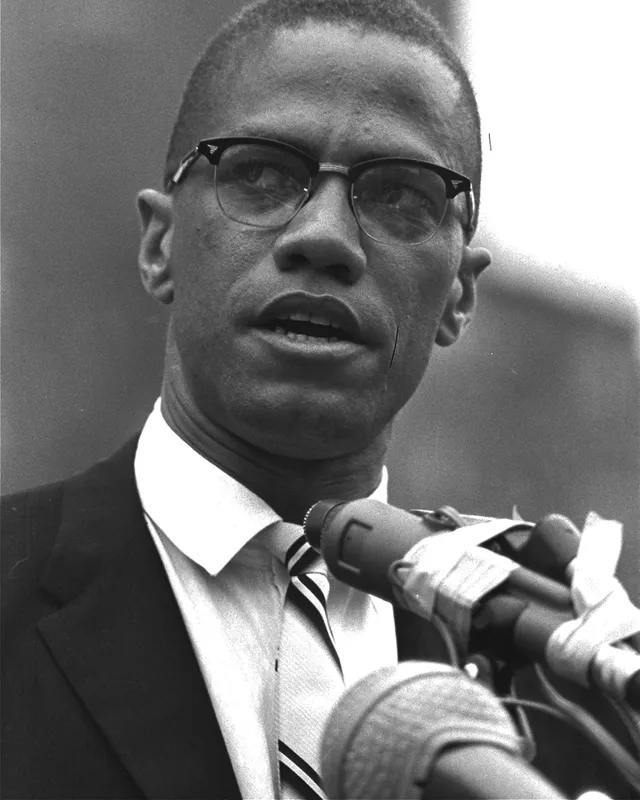
Portrait: Press photograph, 1963, via Wikimedia Commons (opens in a new tab) · Public domain
Malcolm X
- Country
- United States
- Era
- 1925–1965
- Tradition
- Black nationalism, Pan-Africanism
Nation of Islam minister who rejected integration and non-violence as strategies, broke with the Nation in 1964, and in his last year moved towards a human-rights framing that internationalised the struggle before he was assassinated.
Documented positions
Documented positions come from the sources listed. Similarity is this project’s inference from those positions, and is a much weaker claim.
- Argued for Black self-determination, self-defence and independent institutions rather than integration into white society
- Rejected non-violence as a universal principle, defending the right of self-defence "by any means necessary"
- Criticised the 1963 March on Washington as a demonstration managed by its opponents
- Broke with the Nation of Islam in 1964 and, after the hajj, rejected its racial theology while keeping its politics of self-determination
- Founded the Organization of Afro-American Unity to bring the case to the United Nations as a human-rights violation
- Argued that the Black vote should be used strategically rather than delivered automatically to one party
Where it sits on each dimension
Personal liberty
Evidence: Documented
Tradition and change
Evidence: Well documented
Nation and the world
Evidence: Documented
Religion and the state
Evidence: Well documented
Dimensions left unscored, for want of evidence: Wealth and inequality, The state in the economy, Power and its limits, Environment and growth, Crime and punishment
Sources
- Malcolm X with Alex Haley, The Autobiography of Malcolm X · 1965
- Malcolm X, The Ballot or the Bullet · 1964
Last verified: