Thinkers and political figures
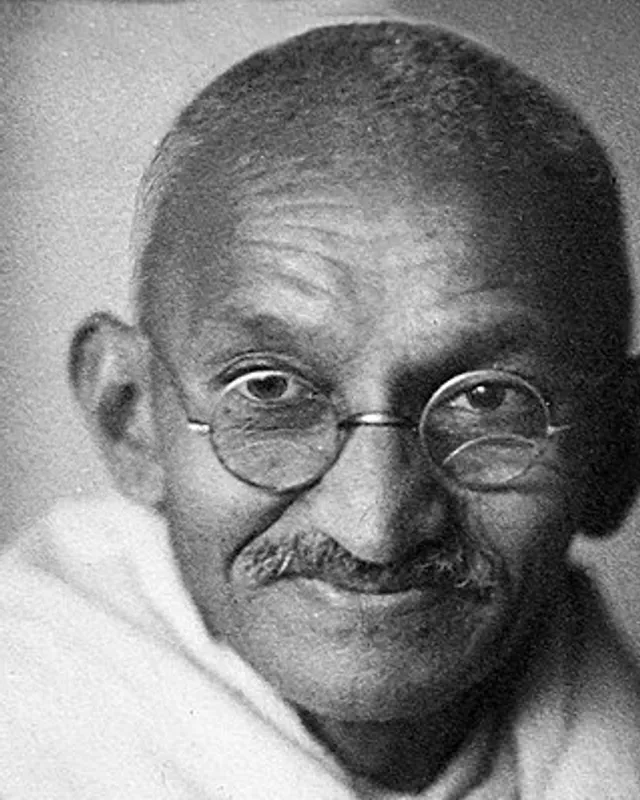
Portrait: Elliott & Fry, 1931, via Wikimedia Commons (opens in a new tab) · Public domain
Mahatma Gandhi
- Country
- India
- Era
- 1869–1948
- Tradition
- Anti-colonial nationalism, non-violence
Led mass non-violent resistance against British rule, and argued for a decentralised society of self-governing villages, minimal state power and religious pluralism.
01
Documented positions
Documented positions come from the sources listed. Similarity is this project’s inference from those positions, and is a much weaker claim.
- Non-violent resistance (satyagraha) as both a method and a moral commitment
- Village self-rule (gram swaraj) and decentralised production over industrial concentration
- Trusteeship: the wealthy should hold property as trustees for society rather than have it expropriated
- Insisted on Hindu–Muslim unity and opposed a religiously defined state
- Opposed untouchability, while differing sharply with Ambedkar over separate electorates
02
Where it sits on each dimension
Wealth and inequality
30
RedistributionMarket outcomes
Evidence: Documented
The state in the economy
70
Active stateLimited state
Evidence: Well documented
Personal liberty
72
Collective orderIndividual freedom
Evidence: Documented
Tradition and change
52
ContinuityReform
Evidence: Documented
Nation and the world
55
InternationalistNationalist
Evidence: Documented
Religion and the state
62
Secular stateReligion in public life
Evidence: Well documented
Power and its limits
82
Concentrated authorityChecks and pluralism
Evidence: Well documented
Environment and growth
82
Production firstProtection first
Evidence: Documented
Crime and punishment
88
PunishmentRehabilitation
Evidence: Well documented
Sources
- M. K. Gandhi, Hind Swaraj, or Indian Home Rule · 1909
- Collected Works of Mahatma Gandhi · Publications Division, Government of India · 1958–1994
Last verified: