Thinkers and political figures
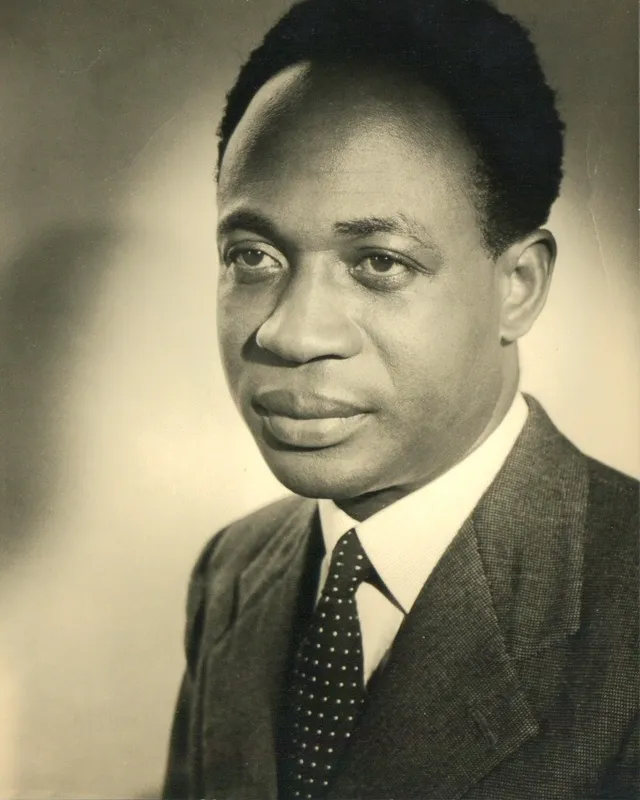
Portrait: The National Archives UK, via Wikimedia Commons (opens in a new tab) · Open Government Licence v1.0
Kwame Nkrumah
- Country
- Ghana
- Era
- 1909–1972
- Tradition
- Pan-Africanism, African socialism
Led Ghana to become the first sub-Saharan African colony to win independence, championed a united Africa, and then built a one-party state that was overthrown by the army.
01
Documented positions
Documented positions come from the sources listed. Similarity is this project’s inference from those positions, and is a much weaker claim.
- Immediate self-government: "Seek ye first the political kingdom"
- Pan-African unity, including a proposed continental union government
- State-led industrialisation, including the Volta River and Akosombo Dam projects
- Preventive Detention Act (1958), allowing imprisonment without trial
- Declared Ghana a one-party state in 1964 with himself as president for life
- Theorised neo-colonialism as continued economic control after formal independence
02
Where it sits on each dimension
Wealth and inequality
16
RedistributionMarket outcomes
Evidence: Well documented
The state in the economy
16
Active stateLimited state
Evidence: Well documented
Personal liberty
22
Collective orderIndividual freedom
Evidence: Well documented
Tradition and change
70
ContinuityReform
Evidence: Documented
Nation and the world
70
InternationalistNationalist
Evidence: Well documented
Power and its limits
16
Concentrated authorityChecks and pluralism
Evidence: Well documented
Crime and punishment
26
PunishmentRehabilitation
Evidence: Documented
Dimensions left unscored, for want of evidence: Environment and growth, Religion and the state
Sources
- Kwame Nkrumah, Neo-Colonialism: The Last Stage of Imperialism · 1965
- Kwame Nkrumah, Africa Must Unite · 1963
Last verified: