Thinkers and political figures
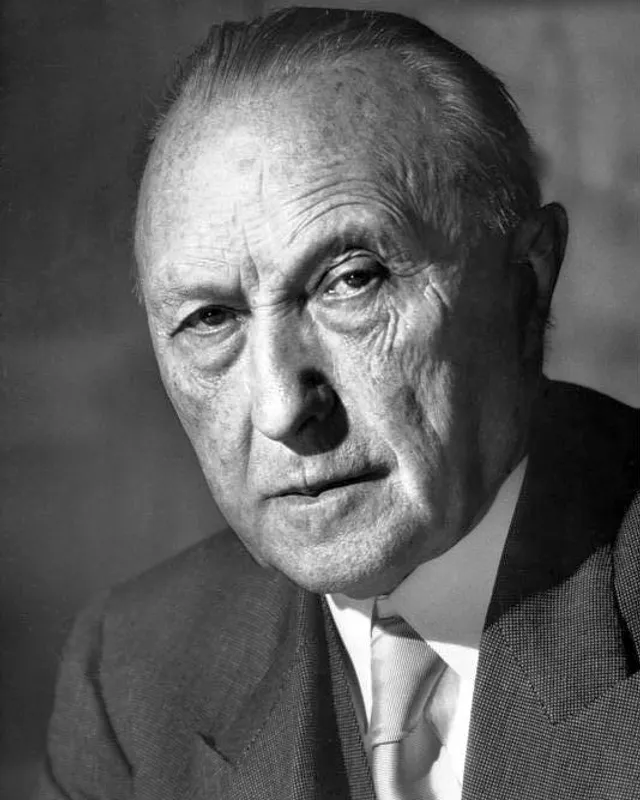
Portrait: Bundesarchiv, via Wikimedia Commons (opens in a new tab) · Creative Commons Attribution-ShareAlike 3.0 Germany
Konrad Adenauer
- Country
- West Germany
- Era
- 1876–1967
- Tradition
- Christian democracy
First chancellor of West Germany, who anchored the new state in the Western alliance, built the social market economy, and made restitution to Israel a founding commitment — while leaving many former Nazi officials in place.
Documented positions
Documented positions come from the sources listed. Similarity is this project’s inference from those positions, and is a much weaker claim.
- Bound West Germany to the Western alliance through NATO membership and the European Coal and Steel Community
- Built the social market economy: private ownership and competition combined with strong welfare provision and codetermination
- Negotiated the reparations agreement with Israel in 1952 against substantial domestic opposition
- Pursued reconciliation with France as the basis of European integration, culminating in the Élysée Treaty
- Refused recognition of East Germany and of the Oder–Neisse line under the Hallstein Doctrine
- Retained former Nazi Party members in senior positions in the civil service and his own chancellery
- Banned the Communist Party of Germany in 1956
Where it sits on each dimension
Wealth and inequality
Evidence: Well documented
The state in the economy
Evidence: Well documented
Personal liberty
Evidence: Documented
Tradition and change
Evidence: Well documented
Nation and the world
Evidence: Well documented
Religion and the state
Evidence: Well documented
Power and its limits
Evidence: Documented
Dimensions left unscored, for want of evidence: Environment and growth, Crime and punishment
Sources
- Konrad Adenauer, Memoirs 1945–53 · 1966
- Charles Williams, Adenauer: The Father of the New Germany · Little, Brown · 2000
Last verified: