Thinkers and political figures
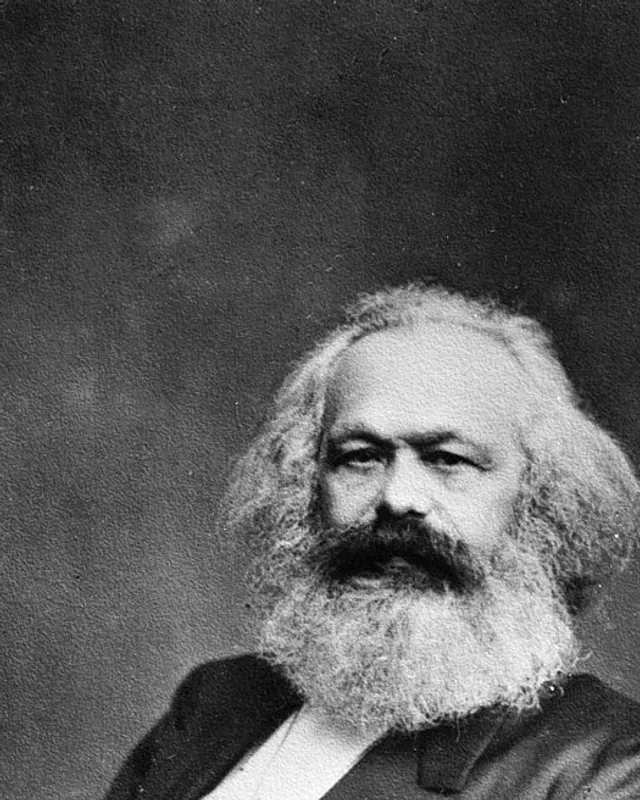
Portrait: John Jabez Edwin Mayall, via Wikimedia Commons (opens in a new tab) · Public domain
Karl Marx
- Country
- Prussia, later England
- Era
- 1818–1883
- Tradition
- Communism
Argued that history is driven by conflict between classes defined by their relation to the means of production, and that capitalism would be replaced by common ownership.
01
Documented positions
Documented positions come from the sources listed. Similarity is this project’s inference from those positions, and is a much weaker claim.
- The history of all hitherto existing society is the history of class struggles (Manifesto, 1848)
- Value originates in labour, and profit in the surplus extracted from it (Capital, Vol. I)
- Called for abolition of private ownership of the means of production
- Wrote very little about the institutional design of a post-revolutionary state
02
Where it sits on each dimension
Wealth and inequality
3
RedistributionMarket outcomes
Evidence: Well documented
The state in the economy
10
Active stateLimited state
Evidence: Documented
Tradition and change
82
ContinuityReform
Evidence: Documented
Nation and the world
12
InternationalistNationalist
Evidence: Well documented
Religion and the state
6
Secular stateReligion in public life
Evidence: Well documented
Dimensions left unscored, for want of evidence: Environment and growth, Crime and punishment, Power and its limits, Personal liberty
Sources
- Karl Marx, Das Kapital, Volume I · 1867
- Karl Marx and Friedrich Engels, The Communist Manifesto · 1848
Last verified: