Thinkers and political figures
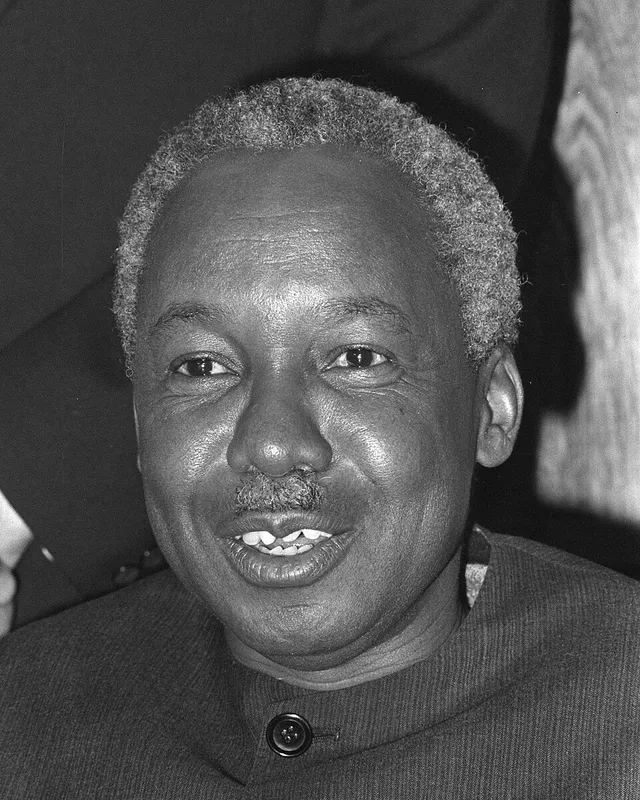
Julius Nyerere
- Country
- Tanzania
- Era
- 1922–1999
- Tradition
- African socialism
Founding president of Tanzania, who built a genuinely national identity out of more than a hundred ethnic groups, pursued a distinctive African socialism that failed economically, and then voluntarily stepped down and admitted it had failed.
01
Documented positions
Documented positions come from the sources listed. Similarity is this project’s inference from those positions, and is a much weaker claim.
- Set out ujamaa in the Arusha Declaration: self-reliance, public ownership and cooperative village agriculture
- Nationalised banks, major industry and large agricultural estates
- Carried out villagisation, relocating millions of rural Tanzanians into planned villages, in part by compulsion
- Made Swahili the national language of instruction and administration, building a shared identity across ethnic lines
- Expanded primary education and literacy dramatically, reaching among the highest rates in Africa
- Sent Tanzanian forces to remove Idi Amin from power in Uganda in 1979
- Stepped down voluntarily in 1985 and publicly acknowledged that the economic programme had failed
02
Where it sits on each dimension
Wealth and inequality
8
RedistributionMarket outcomes
Evidence: Well documented
The state in the economy
10
Active stateLimited state
Evidence: Well documented
Personal liberty
30
Collective orderIndividual freedom
Evidence: Documented
Tradition and change
72
ContinuityReform
Evidence: Documented
Nation and the world
62
InternationalistNationalist
Evidence: Well documented
Power and its limits
25
Concentrated authorityChecks and pluralism
Evidence: Well documented
Dimensions left unscored, for want of evidence: Religion and the state, Environment and growth, Crime and punishment
Sources
- Tanganyika African National Union, The Arusha Declaration · 1967
- Julius Nyerere, Ujamaa: Essays on Socialism · 1968
Last verified: