Thinkers and political figures
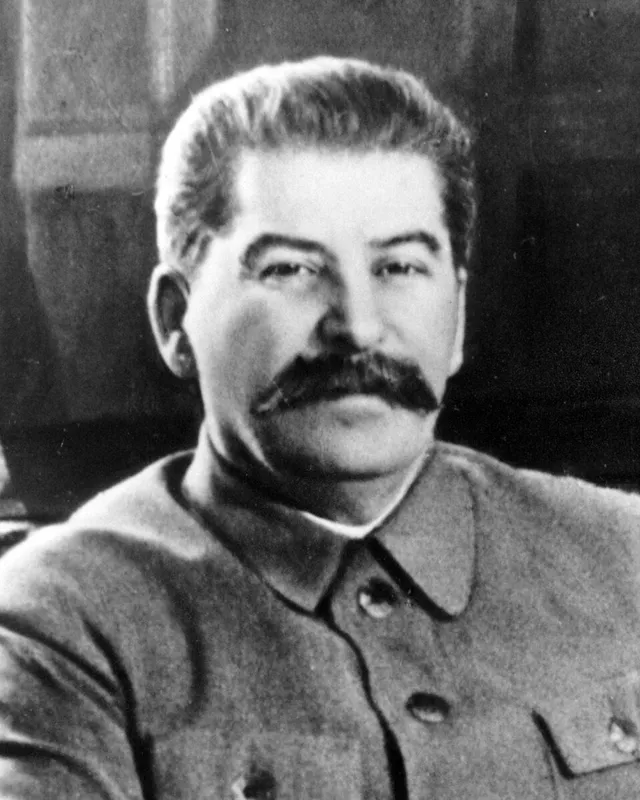
Portrait: Via Wikimedia Commons (opens in a new tab) · Public domain
Joseph Stalin
- Country
- Soviet Union
- Era
- 1878–1953
- Tradition
- Marxism-Leninism, totalitarian rule
Ruled the Soviet Union for three decades, forcing through industrialisation and agricultural collectivisation, and governing by mass arrest, deportation and execution.
01
Documented positions
Documented positions come from the sources listed. Similarity is this project’s inference from those positions, and is a much weaker claim.
- "Socialism in one country": building socialism in the USSR rather than awaiting world revolution
- Forced collectivisation of agriculture from 1929 and rapid heavy industrialisation through five-year plans
- The Great Purge of 1936–38: mass arrests, show trials and executions, including of party leadership
- A vast forced-labour camp system (the Gulag) as an instrument of both punishment and production
- Deportation of entire nationalities, including Chechens, Crimean Tatars and Volga Germans
02
Where it sits on each dimension
Wealth and inequality
2
RedistributionMarket outcomes
Evidence: Well documented
The state in the economy
2
Active stateLimited state
Evidence: Well documented
Personal liberty
1
Collective orderIndividual freedom
Evidence: Well documented
Tradition and change
40
ContinuityReform
Evidence: Documented
Nation and the world
70
InternationalistNationalist
Evidence: Well documented
Religion and the state
4
Secular stateReligion in public life
Evidence: Well documented
Power and its limits
2
Concentrated authorityChecks and pluralism
Evidence: Well documented
Crime and punishment
4
PunishmentRehabilitation
Evidence: Well documented
Dimensions left unscored, for want of evidence: Environment and growth
Sources
- Robert Conquest, The Great Terror: A Reassessment · 1990
- Anne Applebaum, Red Famine: Stalin’s War on Ukraine · 2017
Last verified: