Thinkers and political figures
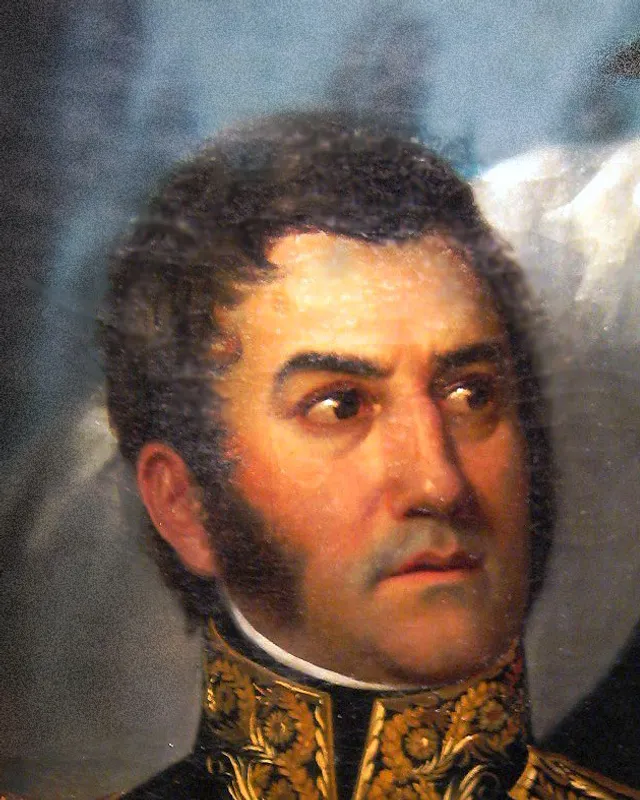
Portrait: Portrait c. 1828, via Wikimedia Commons (opens in a new tab) · Public domain
José de San Martín
- Country
- Argentina, Chile and Peru
- Era
- 1778–1850
- Tradition
- Independence, constitutional monarchism
Liberator of Argentina, Chile and Peru, who marched an army across the Andes, declared Peruvian independence, then met Bolívar in private and withdrew from public life entirely rather than fight him for control.
01
Documented positions
Documented positions come from the sources listed. Similarity is this project’s inference from those positions, and is a much weaker claim.
- Led the crossing of the Andes in 1817 and the campaigns that secured Chilean and Peruvian independence
- Declared the independence of Peru in 1821 and governed briefly as Protector
- Abolished the tribute levied on indigenous peoples and began gradual emancipation of the enslaved
- Favoured a constitutional monarchy under a European prince as the most stable form for the new states
- Established the first national library of Peru and a free press decree, later qualified
- Withdrew from all public office after meeting Bolívar at Guayaquil in 1822 and left for permanent European exile
02
Where it sits on each dimension
Tradition and change
62
ContinuityReform
Evidence: Documented
Nation and the world
88
InternationalistNationalist
Evidence: Well documented
Power and its limits
32
Concentrated authorityChecks and pluralism
Evidence: Documented
Dimensions left unscored, for want of evidence: Wealth and inequality, The state in the economy, Personal liberty, Religion and the state, Environment and growth, Crime and punishment
Sources
- John Lynch, San Martín: Argentine Soldier, American Hero · Yale University Press · 2009
- José de San Martín, Proclamation of the Independence of Peru · 1821
Last verified: