Thinkers and political figures
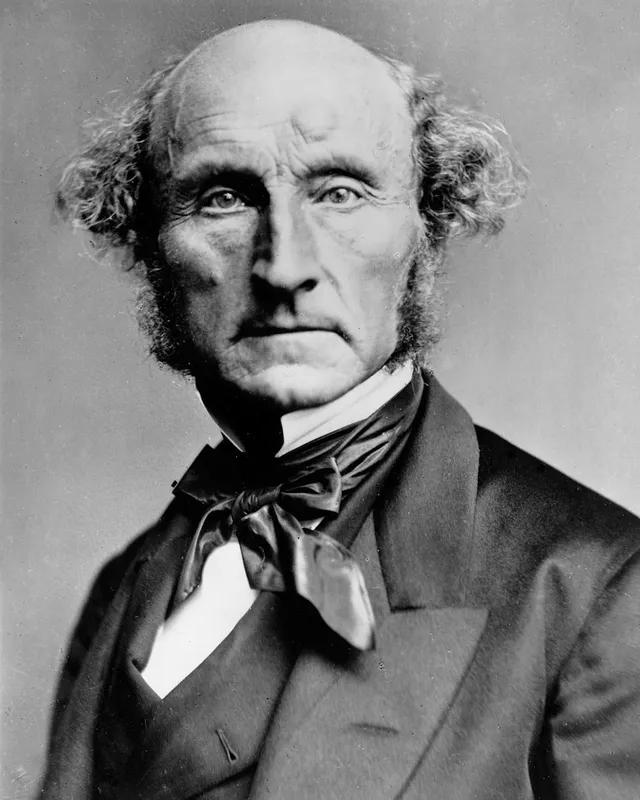
Portrait: London Stereoscopic Company, c. 1870, via Wikimedia Commons (opens in a new tab) · Public domain
John Stuart Mill
- Country
- England
- Era
- 1806–1873
- Tradition
- Liberalism
Gave the classic argument that the only ground for restricting an adult’s freedom is preventing harm to others, and campaigned for women’s suffrage decades before it was won.
01
Documented positions
Documented positions come from the sources listed. Similarity is this project’s inference from those positions, and is a much weaker claim.
- The harm principle: power may be exercised over an individual against their will only to prevent harm to others (On Liberty, ch. I)
- Free expression should be protected even for opinions believed to be false
- Argued for legal and social equality of women (The Subjection of Women, 1869)
- Moved toward a qualified socialism in later life, favouring worker cooperatives
02
Where it sits on each dimension
Wealth and inequality
52
RedistributionMarket outcomes
Evidence: Documented
The state in the economy
58
Active stateLimited state
Evidence: Documented
Personal liberty
94
Collective orderIndividual freedom
Evidence: Well documented
Tradition and change
82
ContinuityReform
Evidence: Well documented
Nation and the world
35
InternationalistNationalist
Evidence: Documented
Religion and the state
22
Secular stateReligion in public life
Evidence: Documented
Power and its limits
78
Concentrated authorityChecks and pluralism
Evidence: Well documented
Crime and punishment
66
PunishmentRehabilitation
Evidence: Documented
Dimensions left unscored, for want of evidence: Environment and growth
Sources
- John Stuart Mill, On Liberty · 1859
- John Stuart Mill, The Subjection of Women · 1869
- John Stuart Mill, Principles of Political Economy · 1848
Last verified: