Thinkers and political figures
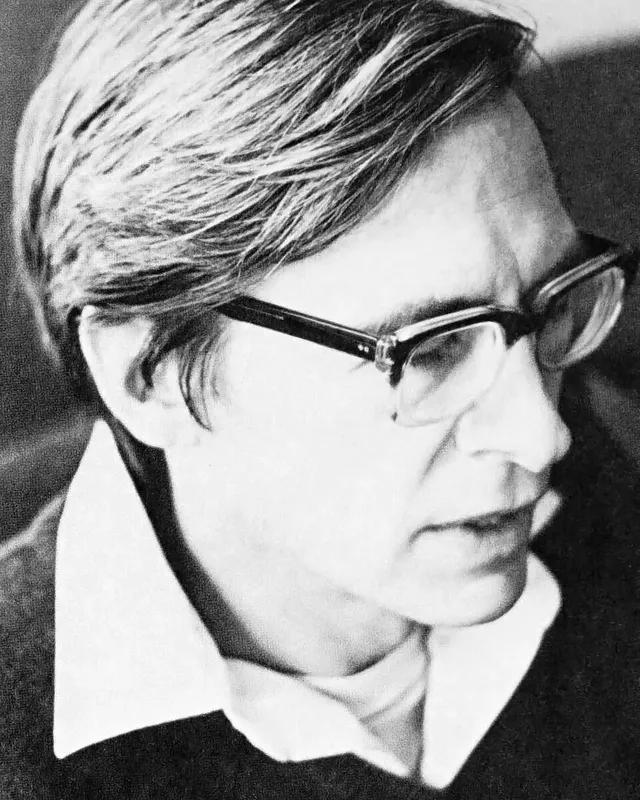
Portrait: Photograph, 1971, via Wikimedia Commons (opens in a new tab) · Public domain
John Rawls
- Country
- United States
- Era
- 1921–2002
- Tradition
- Egalitarian liberalism
The most influential political philosopher of the twentieth century, who asked what principles people would choose for a society if they did not know what position they would occupy in it.
01
Documented positions
Documented positions come from the sources listed. Similarity is this project’s inference from those positions, and is a much weaker claim.
- Argued that principles of justice should be chosen behind a "veil of ignorance" about one’s own place in society
- Held that each person has an equal claim to the most extensive basic liberties compatible with the same for others
- Held that inequalities are justified only if they work to the benefit of the least advantaged — the difference principle
- Argued that political arguments in a diverse society must be justifiable in terms all citizens can accept, not by appeal to one doctrine
- Defended a property-owning democracy or liberal socialism over welfare-state capitalism as better satisfying his principles
- Held that natural talents are morally arbitrary and their rewards a matter for collective decision
02
Where it sits on each dimension
Wealth and inequality
20
RedistributionMarket outcomes
Evidence: Well documented
The state in the economy
38
Active stateLimited state
Evidence: Documented
Personal liberty
84
Collective orderIndividual freedom
Evidence: Well documented
Tradition and change
80
ContinuityReform
Evidence: Well documented
Nation and the world
24
InternationalistNationalist
Evidence: Documented
Religion and the state
10
Secular stateReligion in public life
Evidence: Well documented
Power and its limits
88
Concentrated authorityChecks and pluralism
Evidence: Well documented
Crime and punishment
76
PunishmentRehabilitation
Evidence: Documented
Dimensions left unscored, for want of evidence: Environment and growth
Sources
- John Rawls, A Theory of Justice · 1971
- John Rawls, Political Liberalism · 1993
- Samuel Freeman, Rawls · Routledge · 2007
Last verified: