Thinkers and political figures
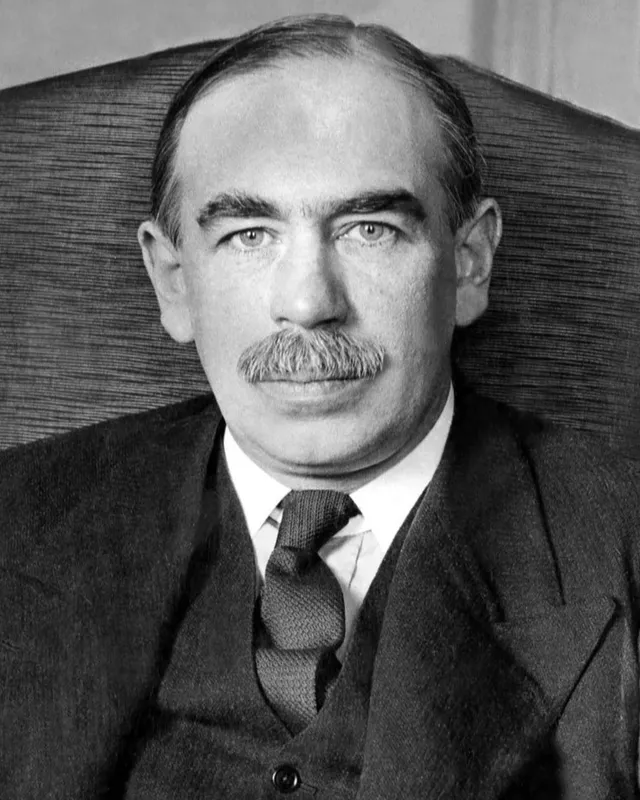
Portrait: Photograph, 1929, via Wikimedia Commons (opens in a new tab) · Public domain
John Maynard Keynes
- Country
- United Kingdom
- Era
- 1883–1946
- Tradition
- Keynesian liberalism
Economist who argued that market economies can settle at high unemployment indefinitely, and that government spending is the instrument for pulling them out — the intellectual basis of post-war economic management in most democracies.
Documented positions
Documented positions come from the sources listed. Similarity is this project’s inference from those positions, and is a much weaker claim.
- Held that economies can remain stuck below full employment, and that government spending should make up the shortfall in demand
- Argued for public investment during downturns and restraint during booms, rather than balanced budgets every year
- Defended capitalism against both socialism and laissez-faire, calling for the state to manage aggregate demand while leaving production private
- Warned in 1919 that the reparations imposed on Germany would produce economic ruin and political catastrophe
- Designed, at Bretton Woods, an international monetary system intended to prevent countries from exporting their unemployment
- Advocated the socialisation of investment while opposing state ownership of industry
Where it sits on each dimension
Wealth and inequality
Evidence: Well documented
The state in the economy
Evidence: Well documented
Personal liberty
Evidence: Well documented
Tradition and change
Evidence: Documented
Nation and the world
Evidence: Well documented
Religion and the state
Evidence: Documented
Power and its limits
Evidence: Well documented
Dimensions left unscored, for want of evidence: Environment and growth, Crime and punishment
Sources
- John Maynard Keynes, The General Theory of Employment, Interest and Money · 1936
- John Maynard Keynes, The Economic Consequences of the Peace · 1919
- Robert Skidelsky, John Maynard Keynes: 1883–1946 · Macmillan · 2003
Last verified: