Thinkers and political figures
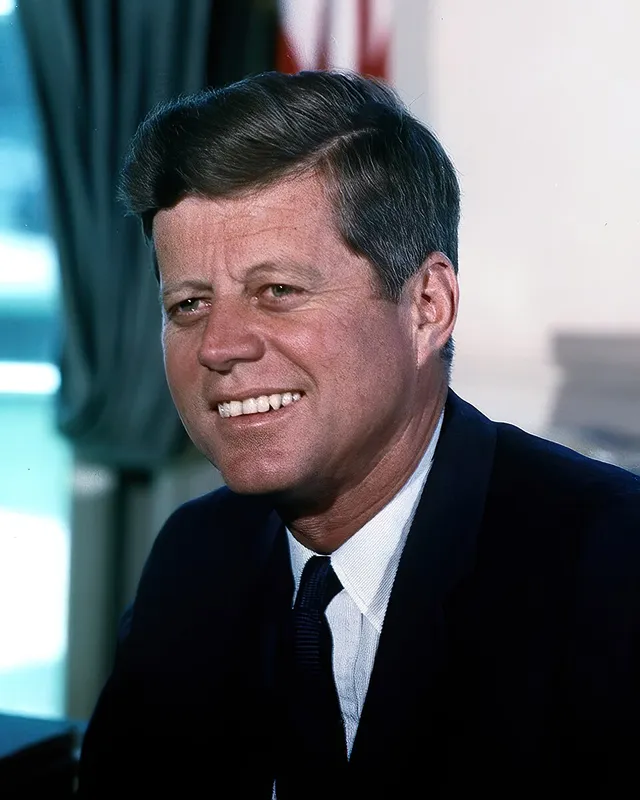
Portrait: White House, via Wikimedia Commons (opens in a new tab) · Public domain
John F. Kennedy
- Country
- United States
- Era
- 1917–1963
- Tradition
- Social liberalism
President during the Cuban Missile Crisis, who chose blockade over invasion, signed the first nuclear test ban, and moved late but decisively toward federal civil rights legislation.
01
Documented positions
Documented positions come from the sources listed. Similarity is this project’s inference from those positions, and is a much weaker claim.
- Chose a naval quarantine over air strikes during the Cuban Missile Crisis of 1962
- Partial Nuclear Test Ban Treaty (1963), ending atmospheric testing
- Proposed the civil rights bill that became the Civil Rights Act of 1964
- Tax reduction combined with expanded federal spending on housing and education
- Committed the United States to a crewed Moon landing before the decade was out
02
Where it sits on each dimension
Wealth and inequality
42
RedistributionMarket outcomes
Evidence: Documented
The state in the economy
46
Active stateLimited state
Evidence: Documented
Personal liberty
58
Collective orderIndividual freedom
Evidence: Documented
Tradition and change
70
ContinuityReform
Evidence: Well documented
Nation and the world
62
InternationalistNationalist
Evidence: Well documented
Religion and the state
42
Secular stateReligion in public life
Evidence: Documented
Power and its limits
70
Concentrated authorityChecks and pluralism
Evidence: Documented
Dimensions left unscored, for want of evidence: Environment and growth, Crime and punishment
Sources
- John F. Kennedy, Report to the American People on Civil Rights · 1963
- Partial Nuclear Test Ban Treaty · 1963
Last verified: