Thinkers and political figures
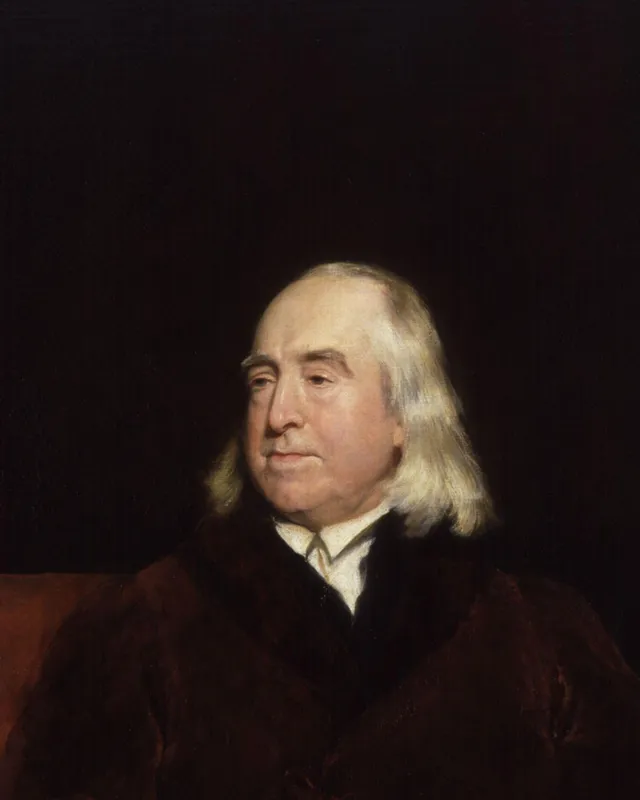
Portrait: Henry William Pickersgill, via Wikimedia Commons (opens in a new tab) · Public domain
Jeremy Bentham
- Country
- England
- Era
- 1748–1832
- Tradition
- Utilitarianism, legal reform
Founder of utilitarianism, who judged every law and institution by a single test — whether it increased happiness — and followed that test into positions on prisons, suffrage and sexual conduct that were far ahead of his time.
Documented positions
Documented positions come from the sources listed. Similarity is this project’s inference from those positions, and is a much weaker claim.
- Held that the sole test of any law or institution is whether it produces the greatest happiness of the greatest number
- Dismissed natural rights as "nonsense upon stilts", arguing rights are created by law rather than found in nature
- Argued for prisons designed around inspection and reform rather than retribution
- Wrote in favour of decriminalising homosexual conduct, over a century before it happened, though he did not publish it
- Supported extending the franchise, annual parliaments and the secret ballot
- Argued that the interests of animals count morally, on the grounds that the question is whether they can suffer
Where it sits on each dimension
Wealth and inequality
Evidence: Documented
The state in the economy
Evidence: Documented
Personal liberty
Evidence: Well documented
Tradition and change
Evidence: Well documented
Nation and the world
Evidence: Documented
Religion and the state
Evidence: Well documented
Power and its limits
Evidence: Well documented
Crime and punishment
Evidence: Well documented
Dimensions left unscored, for want of evidence: Environment and growth
Sources
- Jeremy Bentham, An Introduction to the Principles of Morals and Legislation · 1789
- Jeremy Bentham, Anarchical Fallacies · 1843
- Philip Schofield, Bentham: A Guide for the Perplexed · Continuum · 2009
Last verified: