Thinkers and political figures
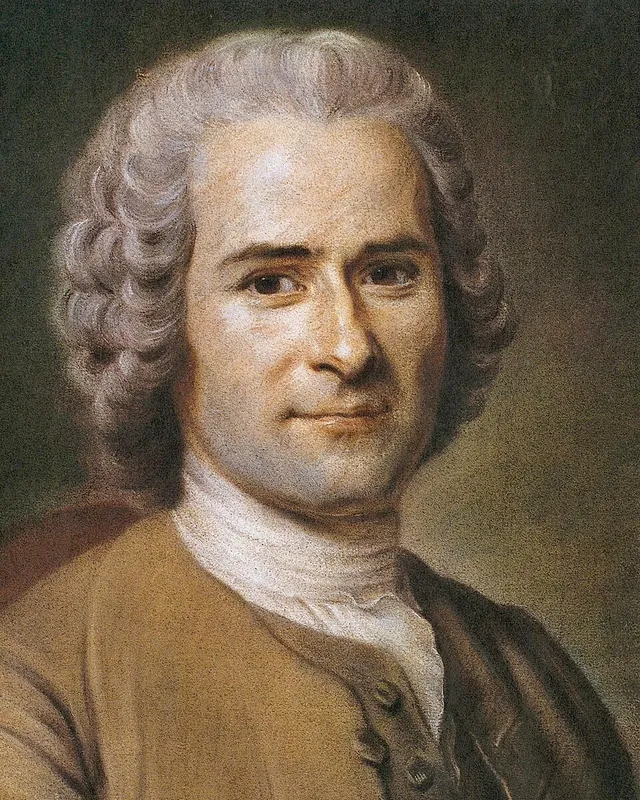
Portrait: Maurice Quentin de La Tour, via Wikimedia Commons (opens in a new tab) · Public domain
Jean-Jacques Rousseau
- Country
- Geneva and France
- Era
- 1712–1778
- Tradition
- Republicanism, popular sovereignty
Held that legitimate authority comes only from the general will of the people, and that inequality of property is the root of political corruption — ideas that armed the French Revolution.
01
Documented positions
Documented positions come from the sources listed. Similarity is this project’s inference from those positions, and is a much weaker claim.
- Sovereignty belongs to the people and cannot be represented or alienated (The Social Contract, 1762)
- Private property is the origin of civil inequality (Discourse on Inequality, 1755)
- Favoured small republics with direct citizen participation over large representative states
- Argued for a civil religion binding citizens to the republic
- Held that citizens may be "forced to be free" when they defy the general will
02
Where it sits on each dimension
Wealth and inequality
26
RedistributionMarket outcomes
Evidence: Well documented
The state in the economy
40
Active stateLimited state
Evidence: Documented
Personal liberty
46
Collective orderIndividual freedom
Evidence: Documented
Tradition and change
66
ContinuityReform
Evidence: Documented
Nation and the world
62
InternationalistNationalist
Evidence: Documented
Religion and the state
48
Secular stateReligion in public life
Evidence: Documented
Power and its limits
60
Concentrated authorityChecks and pluralism
Evidence: Documented
Dimensions left unscored, for want of evidence: Environment and growth, Crime and punishment
Sources
- Jean-Jacques Rousseau, The Social Contract · 1762
- Jean-Jacques Rousseau, Discourse on the Origin of Inequality · 1755
Last verified: