Thinkers and political figures
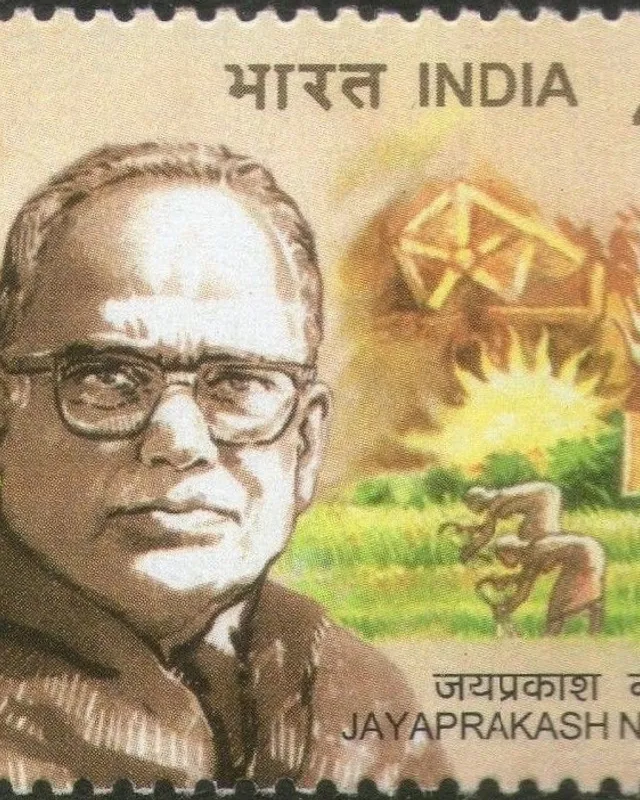
Portrait: India Post commemorative stamp, 2001, via Wikimedia Commons (opens in a new tab) · Government Open Data Licence – India
Jayaprakash Narayan
- Country
- India
- Era
- 1902–1979
- Tradition
- Sarvodaya, total revolution
Marxist turned Gandhian who refused office all his life and, at seventy-two, led the mass movement against Indira Gandhi that provoked the Emergency and then ended it.
01
Documented positions
Documented positions come from the sources listed. Similarity is this project’s inference from those positions, and is a much weaker claim.
- Called for "total revolution" — simultaneous transformation of politics, economy, education and culture by non-violent mass action
- Rejected parliamentary office repeatedly, arguing that moral pressure from outside was more effective
- Advocated decentralised village-level self-government over centralised state planning
- Led the movement against the Indira Gandhi government in 1974–75 and was imprisoned when the Emergency was declared
- Called on police and civil servants to refuse unlawful orders, which the government treated as incitement
- Moved from Marxism to Gandhian socialism, rejecting class violence as a method
02
Where it sits on each dimension
Wealth and inequality
20
RedistributionMarket outcomes
Evidence: Documented
The state in the economy
42
Active stateLimited state
Evidence: Documented
Personal liberty
82
Collective orderIndividual freedom
Evidence: Well documented
Tradition and change
78
ContinuityReform
Evidence: Documented
Power and its limits
90
Concentrated authorityChecks and pluralism
Evidence: Well documented
Dimensions left unscored, for want of evidence: Nation and the world, Religion and the state, Environment and growth, Crime and punishment
Sources
- Jayaprakash Narayan, Towards Total Revolution · 1978
- Allan and Wendy Scarfe, J.P.: His Biography · Orient Longman · 1975
Last verified: