Thinkers and political figures
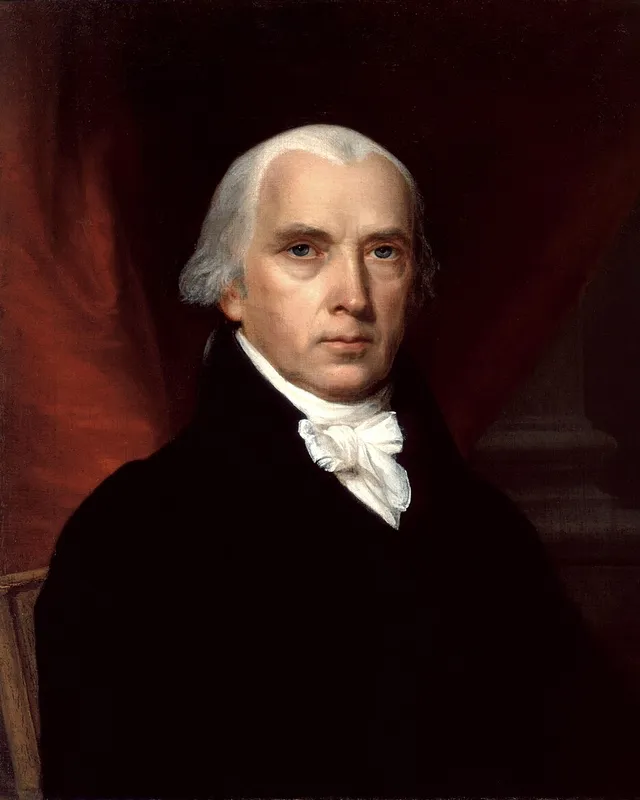
Portrait: John Vanderlyn, via Wikimedia Commons (opens in a new tab) · Public domain
James Madison
- Country
- United States
- Era
- 1751–1836
- Tradition
- Constitutional republicanism
Principal architect of the United States Constitution and author of the Bill of Rights, whose central insight was that a large republic with many competing factions would be safer than a small homogeneous one.
01
Documented positions
Documented positions come from the sources listed. Similarity is this project’s inference from those positions, and is a much weaker claim.
- Argued that a large republic containing many competing factions protects minorities better than a small one
- Designed the separation of powers so that "ambition must be made to counteract ambition"
- Drafted and secured the Bill of Rights, having initially argued such a list was unnecessary
- Wrote the Memorial and Remonstrance against religious assessments, arguing state support of religion corrupts both
- Moved from Hamiltonian federalism to opposing the national bank and broad federal power, co-founding the opposition party
- Held enslaved people at Montpelier throughout his life while calling slavery a "dreadful calamity"
02
Where it sits on each dimension
Wealth and inequality
55
RedistributionMarket outcomes
Evidence: Documented
The state in the economy
68
Active stateLimited state
Evidence: Documented
Personal liberty
76
Collective orderIndividual freedom
Evidence: Well documented
Tradition and change
52
ContinuityReform
Evidence: Documented
Nation and the world
50
InternationalistNationalist
Evidence: Documented
Religion and the state
10
Secular stateReligion in public life
Evidence: Well documented
Power and its limits
90
Concentrated authorityChecks and pluralism
Evidence: Well documented
Dimensions left unscored, for want of evidence: Environment and growth, Crime and punishment
Sources
- James Madison, Federalist No. 10 and No. 51 · 1788
- James Madison, Memorial and Remonstrance Against Religious Assessments · 1785
Last verified: