Thinkers and political figures
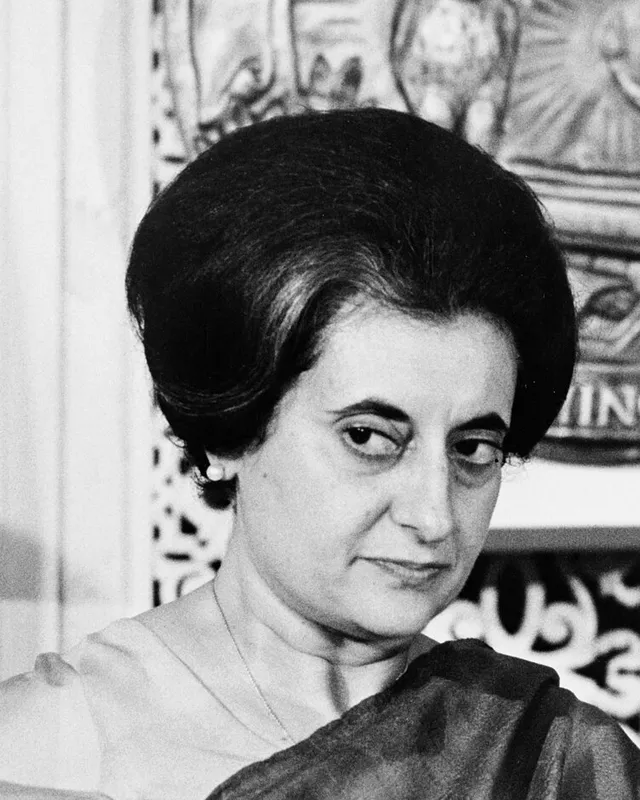
Portrait: Via Wikimedia Commons (opens in a new tab) · Public domain
Indira Gandhi
- Country
- India
- Era
- 1917–1984
- Tradition
- State socialism, centralised executive power
Prime Minister who nationalised banks and greatly expanded state economic control, and who suspended civil liberties during the Emergency of 1975–77 before losing and later winning elections again.
01
Documented positions
Documented positions come from the sources listed. Similarity is this project’s inference from those positions, and is a much weaker claim.
- Nationalised fourteen major private banks in 1969 and the coal industry in 1973
- Abolished the privy purses of the former princely rulers
- Declared a state of Emergency in 1975: censorship, mass detention of opponents, postponed elections
- Inserted "socialist" and "secular" into the Preamble by the 42nd Amendment, 1976
- Accepted the 1977 election result and left office after defeat
02
Where it sits on each dimension
Wealth and inequality
20
RedistributionMarket outcomes
Evidence: Well documented
The state in the economy
16
Active stateLimited state
Evidence: Well documented
Personal liberty
26
Collective orderIndividual freedom
Evidence: Well documented
Tradition and change
60
ContinuityReform
Evidence: Documented
Nation and the world
68
InternationalistNationalist
Evidence: Documented
Religion and the state
25
Secular stateReligion in public life
Evidence: Documented
Power and its limits
22
Concentrated authorityChecks and pluralism
Evidence: Well documented
Dimensions left unscored, for want of evidence: Environment and growth, Crime and punishment
Sources
- Constitution (Forty-second Amendment) Act · Government of India · 1976
- Shah Commission of Inquiry, Interim and Final Reports · Government of India · 1978
Last verified: