Thinkers and political figures
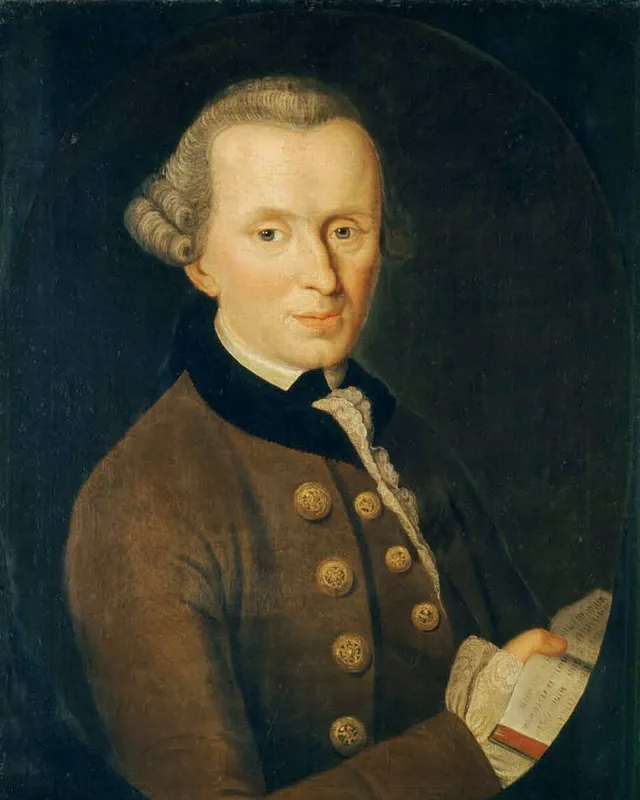
Portrait: Anonymous, via Wikimedia Commons (opens in a new tab) · Public domain
Immanuel Kant
- Country
- Prussia
- Era
- 1724–1804
- Tradition
- Liberal republicanism, cosmopolitanism
Philosopher whose argument that people must never be treated merely as means underpins modern human rights, and whose essay on perpetual peace anticipated the case for international law and federated republics.
01
Documented positions
Documented positions come from the sources listed. Similarity is this project’s inference from those positions, and is a much weaker claim.
- Held that every person must be treated as an end in themselves, never merely as a means to someone else’s purpose
- Argued that republics are less prone to war because the people who bear its costs decide whether to fight
- Proposed a federation of free states and a body of cosmopolitan law binding on all of them
- Defended freedom of the pen as the one right a subject may exercise against a ruler
- Opposed revolution as a right, while holding that rulers are obliged to move towards constitutional government
- Argued that punishment must be proportionate to the offence and never used purely as a deterrent
02
Where it sits on each dimension
Personal liberty
70
Collective orderIndividual freedom
Evidence: Well documented
Tradition and change
60
ContinuityReform
Evidence: Documented
Nation and the world
16
InternationalistNationalist
Evidence: Well documented
Religion and the state
40
Secular stateReligion in public life
Evidence: Documented
Power and its limits
78
Concentrated authorityChecks and pluralism
Evidence: Well documented
Crime and punishment
22
PunishmentRehabilitation
Evidence: Well documented
Dimensions left unscored, for want of evidence: Wealth and inequality, The state in the economy, Environment and growth
Sources
- Immanuel Kant, Perpetual Peace: A Philosophical Sketch · 1795
- Immanuel Kant, Groundwork of the Metaphysics of Morals · 1785
Last verified: