Thinkers and political figures
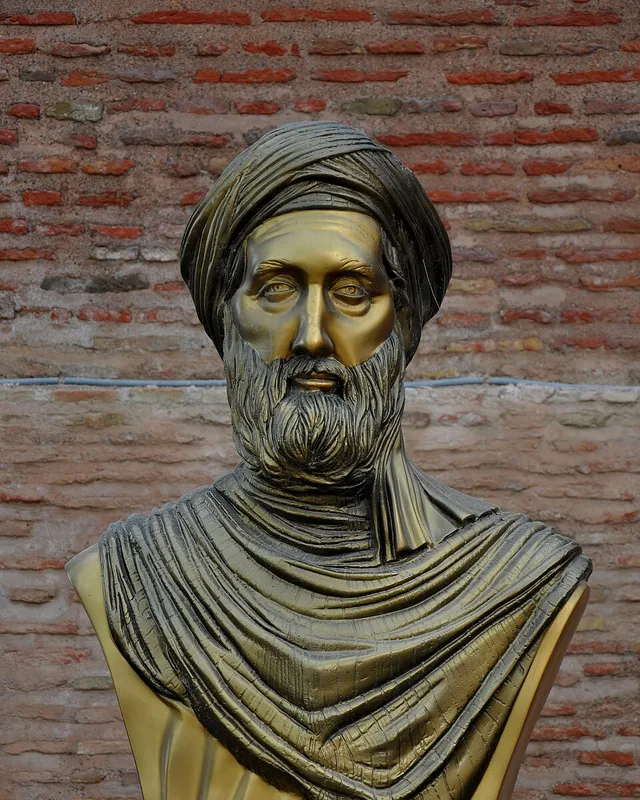
Portrait: Photograph by Reda Kerbush, via Wikimedia Commons (opens in a new tab) · Creative Commons Attribution-ShareAlike 4.0
Ibn Khaldun
- Country
- Tunis and Cairo
- Era
- 1332–1406
- Tradition
- Historical sociology
Historian and judge who explained the rise and collapse of dynasties through asabiyyah — group solidarity — and in doing so founded something close to sociology four centuries before the word existed.
01
Documented positions
Documented positions come from the sources listed. Similarity is this project’s inference from those positions, and is a much weaker claim.
- Argued that dynasties rise on group solidarity and fall as urban luxury dissolves it, typically within four generations
- Held that excessive taxation destroys the productive activity it is levied on, reducing total revenue
- Treated religion as a force that can multiply group solidarity rather than as the foundation of the state by itself
- Distinguished government based on rational statecraft from government based on revealed law, and analysed both
- Held that justice is the precondition of civilisation and that oppression by rulers causes societies to decay
02
Where it sits on each dimension
Wealth and inequality
55
RedistributionMarket outcomes
Evidence: Documented
The state in the economy
62
Active stateLimited state
Evidence: Documented
Religion and the state
70
Secular stateReligion in public life
Evidence: Documented
Crime and punishment
45
PunishmentRehabilitation
Evidence: Documented
Dimensions left unscored, for want of evidence: Personal liberty, Tradition and change, Nation and the world, Power and its limits, Environment and growth
Sources
- Ibn Khaldun, The Muqaddimah: An Introduction to History · 1377
- Robert Irwin, Ibn Khaldun: An Intellectual Biography · Princeton University Press · 2018
Last verified: