Thinkers and political figures
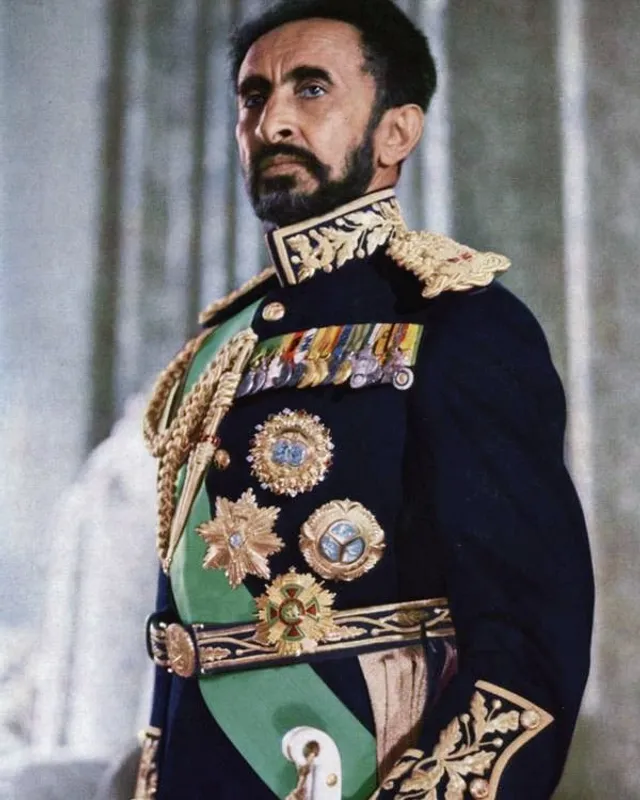
Portrait: Photograph, via Wikimedia Commons (opens in a new tab) · Public domain
Haile Selassie
- Country
- Ethiopia
- Era
- 1892–1975
- Tradition
- Modernising monarchy, Pan-Africanism
Last emperor of Ethiopia, whose appeal to the League of Nations against Italian invasion became the defining indictment of collective security’s failure, and who founded the Organisation of African Unity before being deposed amid famine.
Documented positions
Documented positions come from the sources listed. Similarity is this project’s inference from those positions, and is a much weaker claim.
- Appealed to the League of Nations in 1936 against the Italian invasion, warning that collective security was being abandoned
- Granted Ethiopia its first written constitution in 1931 and a revised one in 1955 with an elected lower house of limited power
- Abolished slavery in Ethiopia through a series of decrees culminating in 1942
- Founded the Organisation of African Unity in 1963 and hosted its headquarters in Addis Ababa
- Established modern schools, a university and a national bank, sending students abroad for training
- Retained absolute personal authority, with ministers answerable to him rather than to parliament
- Was deposed in 1974 after the government concealed a famine in Wollo in which tens of thousands died
Where it sits on each dimension
Personal liberty
Evidence: Documented
Tradition and change
Evidence: Documented
Nation and the world
Evidence: Well documented
Religion and the state
Evidence: Well documented
Power and its limits
Evidence: Well documented
Dimensions left unscored, for want of evidence: Wealth and inequality, The state in the economy, Environment and growth, Crime and punishment
Sources
- Haile Selassie, Appeal to the League of Nations · 1936
- Harold G. Marcus, Haile Sellassie I: The Formative Years · University of California Press · 1987
Last verified: