Thinkers and political figures
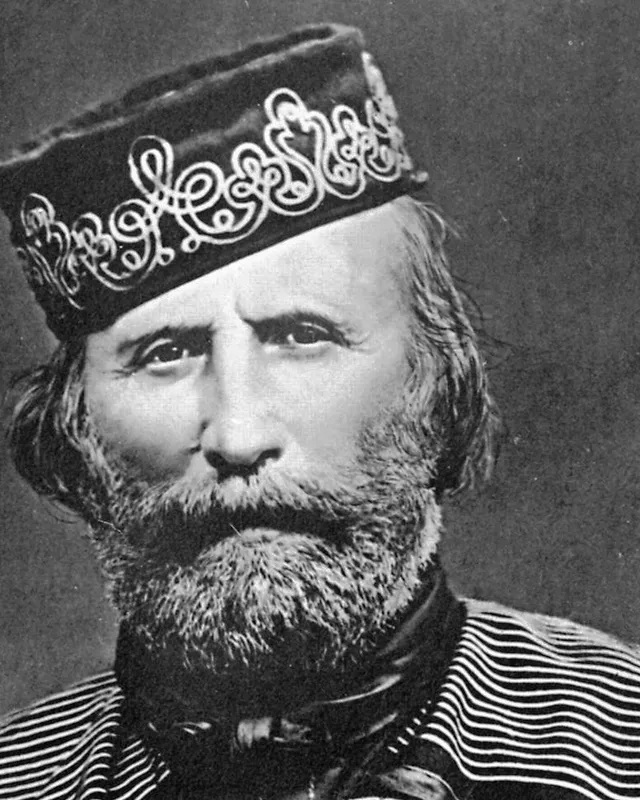
Portrait: Photograph, 1866, via Wikimedia Commons (opens in a new tab) · Public domain
Giuseppe Garibaldi
- Country
- Italy
- Era
- 1807–1882
- Tradition
- Republican nationalism
Guerrilla commander who conquered the Kingdom of the Two Sicilies with about a thousand volunteers and handed it to the King of Sardinia, making Italian unification possible while sacrificing the republic he wanted.
01
Documented positions
Documented positions come from the sources listed. Similarity is this project’s inference from those positions, and is a much weaker claim.
- Led the Expedition of the Thousand in 1860, taking Sicily and Naples for the cause of Italian unification
- Handed his conquests to Victor Emmanuel II rather than found a republic, to avoid civil war among Italians
- Was a lifelong republican who accepted monarchy only as the practical means to unity
- Abolished feudal dues and redistributed some church and crown land in the territories he took
- Supported universal suffrage, women’s emancipation and the abolition of the death penalty
- Fought for republics in Uruguay and Brazil, and refused a Union command in the American Civil War when Lincoln would not commit to abolition
- Was fiercely anticlerical, describing the papacy as an obstacle to Italian nationhood
02
Where it sits on each dimension
Personal liberty
70
Collective orderIndividual freedom
Evidence: Documented
Tradition and change
78
ContinuityReform
Evidence: Documented
Nation and the world
82
InternationalistNationalist
Evidence: Well documented
Religion and the state
8
Secular stateReligion in public life
Evidence: Well documented
Power and its limits
66
Concentrated authorityChecks and pluralism
Evidence: Documented
Crime and punishment
74
PunishmentRehabilitation
Evidence: Documented
Dimensions left unscored, for want of evidence: Wealth and inequality, The state in the economy, Environment and growth
Sources
- Giuseppe Garibaldi, Autobiography of Giuseppe Garibaldi · 1889
- Lucy Riall, Garibaldi: Invention of a Hero · Yale University Press · 2007
Last verified: