Thinkers and political figures
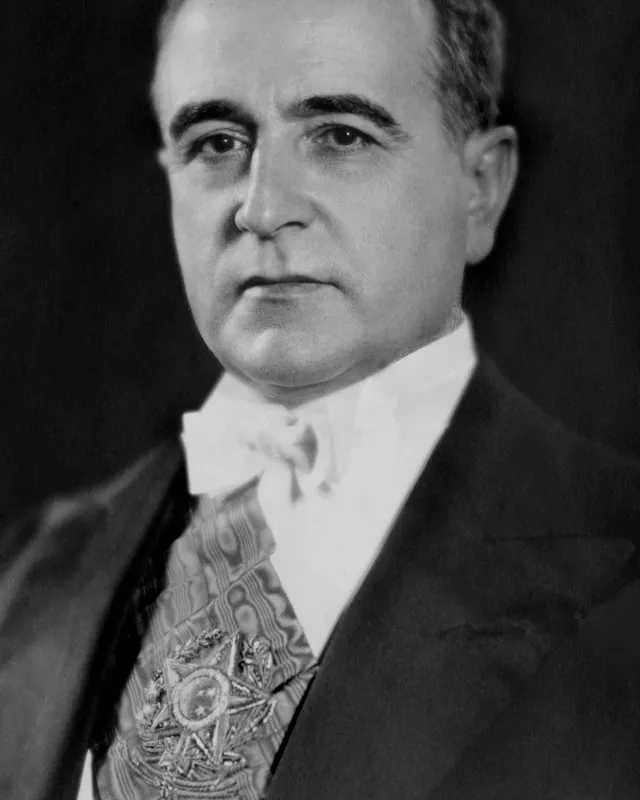
Portrait: Photograph, 1930, via Wikimedia Commons (opens in a new tab) · Public domain
Getúlio Vargas
- Country
- Brazil
- Era
- 1882–1954
- Tradition
- Corporatist populism, developmentalism
Ruled Brazil for eighteen of twenty-four years, first as dictator and then as elected president, industrialising the country and writing its labour code before shooting himself in office.
01
Documented positions
Documented positions come from the sources listed. Similarity is this project’s inference from those positions, and is a much weaker claim.
- Established the Estado Novo dictatorship in 1937, dissolving congress and censoring the press
- Wrote the consolidated labour laws granting the minimum wage, paid holidays, pensions and the eight-hour day
- Created state enterprises in steel, oil and mining, including Petrobras and Companhia Siderúrgica Nacional
- Granted women the vote in 1932 and introduced the secret ballot
- Organised unions under state control, requiring official recognition and banning independent federations
- Brought Brazil into the Second World War on the Allied side after initial ambivalence
- Was returned to office by election in 1951 and took his own life in 1954 amid a political crisis
02
Where it sits on each dimension
Wealth and inequality
26
RedistributionMarket outcomes
Evidence: Well documented
The state in the economy
20
Active stateLimited state
Evidence: Well documented
Personal liberty
18
Collective orderIndividual freedom
Evidence: Well documented
Tradition and change
55
ContinuityReform
Evidence: Documented
Nation and the world
84
InternationalistNationalist
Evidence: Well documented
Power and its limits
20
Concentrated authorityChecks and pluralism
Evidence: Well documented
Dimensions left unscored, for want of evidence: Religion and the state, Environment and growth, Crime and punishment
Sources
- Government of Brazil, Consolidação das Leis do Trabalho · 1943
- Robert M. Levine, Father of the Poor? Vargas and His Era · Cambridge University Press · 1998
Last verified: