Thinkers and political figures
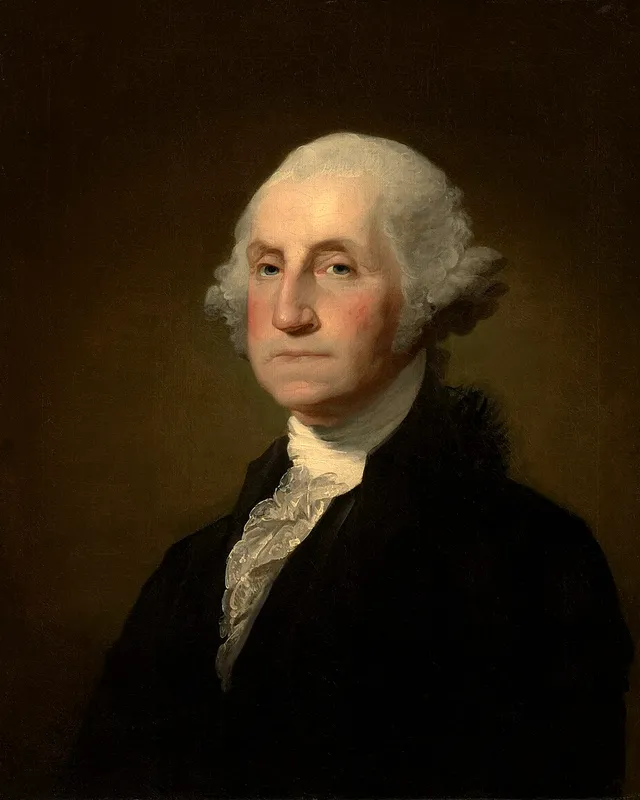
Portrait: Gilbert Stuart, via Wikimedia Commons (opens in a new tab) · Public domain
George Washington
- Country
- United States
- Era
- 1732–1799
- Tradition
- Republicanism
Commanded the Continental Army, presided over the constitutional convention, and then set the precedent that mattered most: he gave up power voluntarily after two terms.
01
Documented positions
Documented positions come from the sources listed. Similarity is this project’s inference from those positions, and is a much weaker claim.
- Resigned his commission in 1783 and left office after two terms, establishing the peaceful transfer of power
- Warned against permanent party factions and entangling foreign alliances (Farewell Address, 1796)
- Supported Hamilton’s national bank, funded debt and protective tariffs
- Suppressed the Whiskey Rebellion in 1794, asserting federal authority to tax
- Enslaved people at Mount Vernon throughout his life, freeing them in his will
02
Where it sits on each dimension
Wealth and inequality
62
RedistributionMarket outcomes
Evidence: Documented
The state in the economy
56
Active stateLimited state
Evidence: Documented
Personal liberty
56
Collective orderIndividual freedom
Evidence: Documented
Tradition and change
40
ContinuityReform
Evidence: Documented
Nation and the world
66
InternationalistNationalist
Evidence: Well documented
Power and its limits
68
Concentrated authorityChecks and pluralism
Evidence: Well documented
Dimensions left unscored, for want of evidence: Environment and growth, Crime and punishment, Religion and the state
Sources
- George Washington, Farewell Address · 1796
- Ron Chernow, Washington: A Life · 2010
Last verified: