Thinkers and political figures
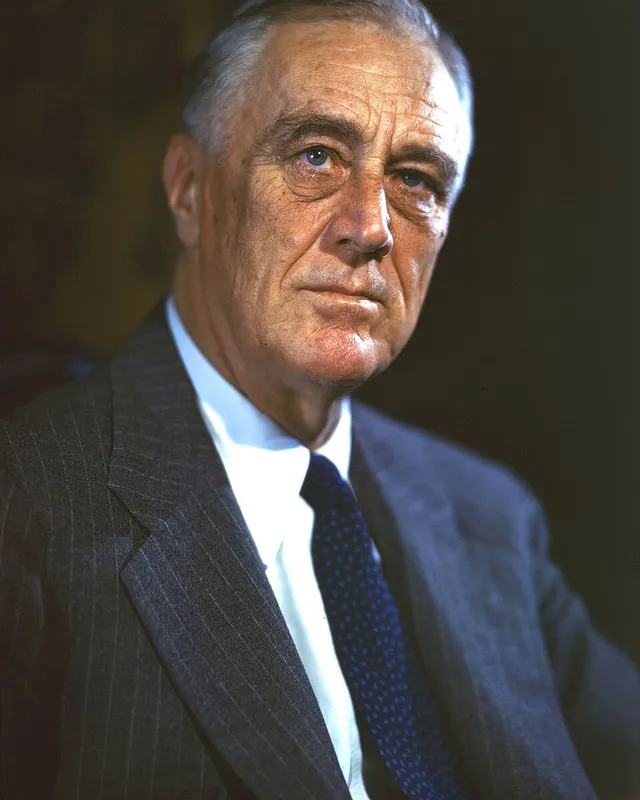
Portrait: Leon A. Perskie, 1944, via Wikimedia Commons (opens in a new tab) · Creative Commons Attribution 2.0
Franklin D. Roosevelt
- Country
- United States
- Era
- 1882–1945
- Tradition
- Social liberalism
President for twelve years, whose New Deal built the American welfare state and financial regulation, and who led the country through the Second World War.
01
Documented positions
Documented positions come from the sources listed. Similarity is this project’s inference from those positions, and is a much weaker claim.
- Social Security Act (1935), establishing federal old-age and unemployment insurance
- Glass-Steagall Act and the Securities and Exchange Commission, regulating banking and markets
- National Labor Relations Act (1935), guaranteeing collective bargaining
- Large-scale public employment through the WPA and the Civilian Conservation Corps
- Executive Order 9066 (1942), authorising the internment of Japanese Americans
02
Where it sits on each dimension
Wealth and inequality
26
RedistributionMarket outcomes
Evidence: Well documented
The state in the economy
24
Active stateLimited state
Evidence: Well documented
Personal liberty
46
Collective orderIndividual freedom
Evidence: Documented
Tradition and change
66
ContinuityReform
Evidence: Documented
Nation and the world
46
InternationalistNationalist
Evidence: Documented
Power and its limits
58
Concentrated authorityChecks and pluralism
Evidence: Documented
Environment and growth
62
Production firstProtection first
Evidence: Documented
Dimensions left unscored, for want of evidence: Religion and the state, Crime and punishment
Sources
- Social Security Act · United States Congress · 1935
- Four Freedoms address to Congress · 1941
- Executive Order 9066 · 1942
Last verified: