Thinkers and political figures
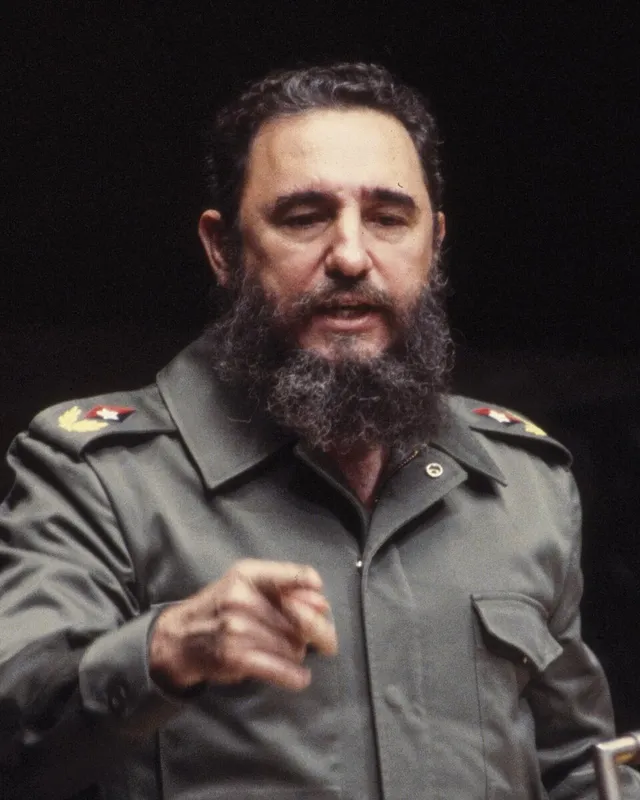
Portrait: Photograph, via Wikimedia Commons (opens in a new tab) · Public domain
Fidel Castro
- Country
- Cuba
- Era
- 1926–2016
- Tradition
- Marxism-Leninism, anti-imperialism
Led the revolution that overthrew Batista and governed Cuba for forty-nine years, building universal health care and literacy alongside a one-party state that imprisoned its critics.
01
Documented positions
Documented positions come from the sources listed. Similarity is this project’s inference from those positions, and is a much weaker claim.
- Nationalised all major industry, banking, commerce and foreign-owned property after 1959
- Built universal free health care and education, achieving literacy and infant mortality rates comparable to wealthy countries
- Established a one-party state, banning independent parties, press and trade unions
- Carried out land reform, capping holdings and redistributing estates to cooperatives and smallholders
- Sent Cuban troops and doctors abroad, notably to Angola against South African forces
- Imprisoned political dissidents, writers and, in the 1960s, gay men in labour camps — a policy he later called a personal injustice
- Aligned Cuba with the Soviet Union while claiming leadership of the non-aligned movement
02
Where it sits on each dimension
Wealth and inequality
4
RedistributionMarket outcomes
Evidence: Well documented
The state in the economy
4
Active stateLimited state
Evidence: Well documented
Personal liberty
6
Collective orderIndividual freedom
Evidence: Well documented
Tradition and change
74
ContinuityReform
Evidence: Documented
Nation and the world
60
InternationalistNationalist
Evidence: Well documented
Religion and the state
8
Secular stateReligion in public life
Evidence: Well documented
Power and its limits
4
Concentrated authorityChecks and pluralism
Evidence: Well documented
Crime and punishment
22
PunishmentRehabilitation
Evidence: Documented
Dimensions left unscored, for want of evidence: Environment and growth
Sources
- Fidel Castro, History Will Absolve Me · 1953
- Tad Szulc, Fidel: A Critical Portrait · William Morrow · 1986
Last verified: