Thinkers and political figures
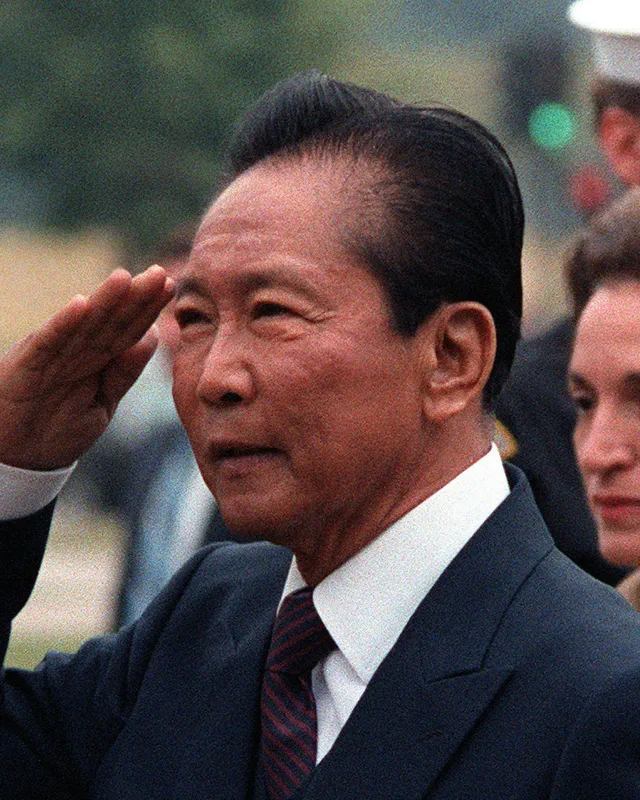
Portrait: Photograph, via Wikimedia Commons (opens in a new tab) · Creative Commons Attribution-ShareAlike 3.0
Ferdinand Marcos
- Country
- Philippines
- Era
- 1917–1989
- Tradition
- Authoritarian populism
Philippine president who declared martial law rather than leave office at the end of his second term, ruled for fourteen more years, and was removed by a mass uprising after an election he was found to have stolen.
Documented positions
Documented positions come from the sources listed. Similarity is this project’s inference from those positions, and is a much weaker claim.
- Declared martial law in 1972, closing Congress, suspending habeas corpus and ruling by decree
- Pursued large-scale infrastructure construction financed by foreign borrowing, quadrupling national debt
- Awarded monopoly control of major industries to associates, a system documented as crony capitalism
- Implemented a land reform programme limited to rice and corn lands, with partial effect
- Held a controlled 1986 snap election, the falsification of which triggered the People Power uprising
- Was found by Philippine and foreign courts to have taken billions of dollars in state funds
Where it sits on each dimension
Wealth and inequality
Evidence: Documented
The state in the economy
Evidence: Documented
Personal liberty
Evidence: Well documented
Nation and the world
Evidence: Well documented
Power and its limits
Evidence: Well documented
Crime and punishment
Evidence: Documented
Dimensions left unscored, for want of evidence: Tradition and change, Religion and the state, Environment and growth
Sources
- Primitivo Mijares, The Conjugal Dictatorship of Ferdinand and Imelda Marcos · 1976
- Amnesty International, Report of an Amnesty International Mission to the Republic of the Philippines · 1976
Last verified: