Thinkers and political figures
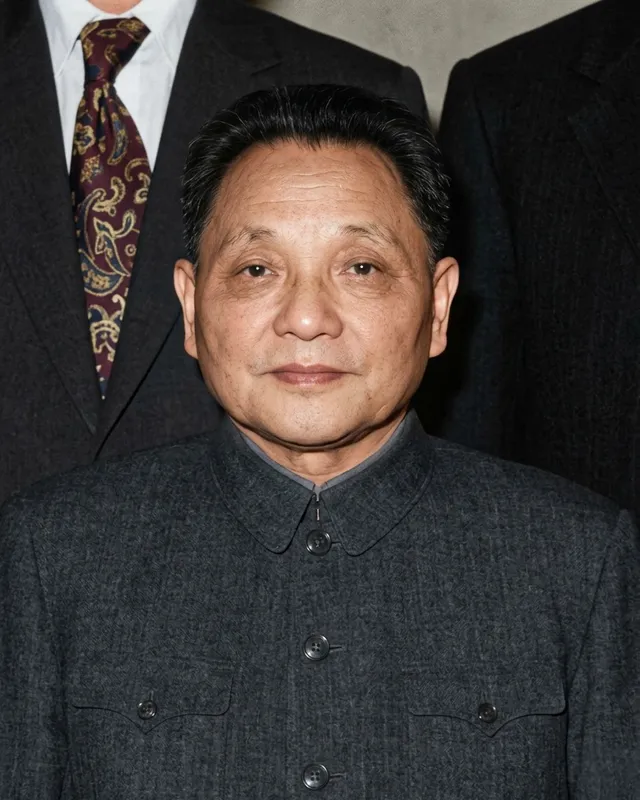
Portrait: Via Wikimedia Commons (opens in a new tab) · Creative Commons Attribution-ShareAlike 4.0
Deng Xiaoping
- Country
- China
- Era
- 1904–1997
- Tradition
- Market reform under one-party rule
The leader who opened China to market forces after Mao, lifting hundreds of millions out of poverty while keeping the party’s political monopoly absolute — and ordering the suppression at Tiananmen in 1989.
01
Documented positions
Documented positions come from the sources listed. Similarity is this project’s inference from those positions, and is a much weaker claim.
- Household responsibility system in agriculture, restoring family farming from 1978
- Special Economic Zones and opening to foreign investment and export manufacturing
- "Socialism with Chinese characteristics": market mechanisms without political liberalisation
- Ordered the military suppression of the Tiananmen Square protests in 1989
- Introduced term limits and collective leadership within the party
02
Where it sits on each dimension
Wealth and inequality
48
RedistributionMarket outcomes
Evidence: Well documented
The state in the economy
40
Active stateLimited state
Evidence: Well documented
Personal liberty
8
Collective orderIndividual freedom
Evidence: Well documented
Tradition and change
40
ContinuityReform
Evidence: Documented
Nation and the world
78
InternationalistNationalist
Evidence: Documented
Religion and the state
12
Secular stateReligion in public life
Evidence: Documented
Power and its limits
6
Concentrated authorityChecks and pluralism
Evidence: Well documented
Crime and punishment
12
PunishmentRehabilitation
Evidence: Well documented
Dimensions left unscored, for want of evidence: Environment and growth
Sources
- Ezra Vogel, Deng Xiaoping and the Transformation of China · Harvard University Press · 2011
- China poverty reduction data, 1981–2015 · World Bank
Last verified: