Thinkers and political figures
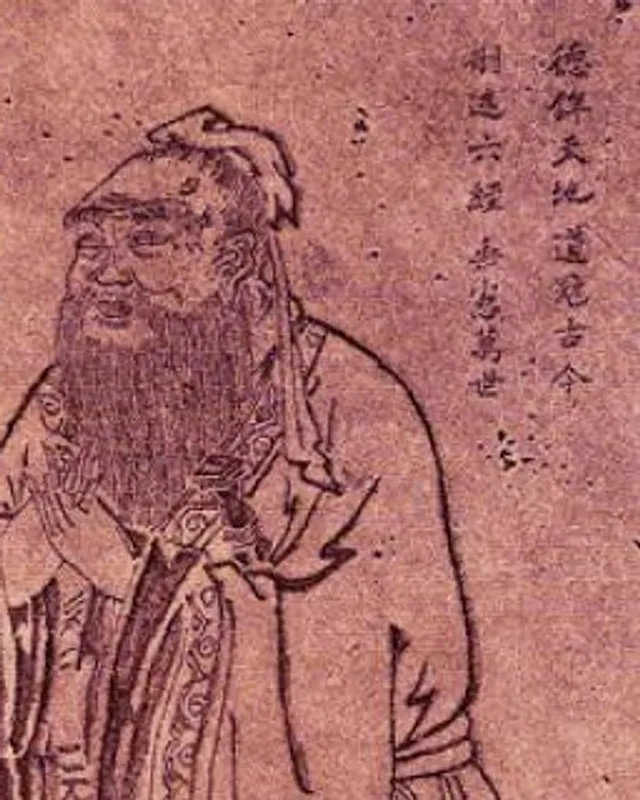
Portrait: Tang-dynasty depiction, artist unknown, via Wikimedia Commons (opens in a new tab) · Public domain
Confucius
- Country
- State of Lu, China
- Era
- 551–479 BCE
- Tradition
- Confucianism
Teacher whose account of government by moral example, ritual propriety and obligation between ranks became the organising political philosophy of imperial China, Korea, Japan and Vietnam for two millennia.
01
Documented positions
Documented positions come from the sources listed. Similarity is this project’s inference from those positions, and is a much weaker claim.
- Held that rulers govern best by moral example, and that a ruler who must rely on punishment has already failed
- Argued that social harmony rests on each person fulfilling the obligations of their role — ruler, subject, parent, child
- Insisted that office should go to the educated and virtuous rather than the hereditary nobility
- Held that a ruler who loses virtue forfeits the mandate to rule
- Placed ritual and inherited custom at the centre of political order rather than written law
- Taught that the first duty of government is to feed the people and win their trust
02
Where it sits on each dimension
Personal liberty
22
Collective orderIndividual freedom
Evidence: Documented
Tradition and change
8
ContinuityReform
Evidence: Well documented
Religion and the state
60
Secular stateReligion in public life
Evidence: Documented
Power and its limits
22
Concentrated authorityChecks and pluralism
Evidence: Documented
Crime and punishment
66
PunishmentRehabilitation
Evidence: Documented
Dimensions left unscored, for want of evidence: Wealth and inequality, The state in the economy, Nation and the world, Environment and growth
Sources
- Confucius (compiled by disciples), The Analects · c. 400 BCE
- David S. Nivison, The Ways of Confucianism · Open Court · 1996
Last verified: