Thinkers and political figures
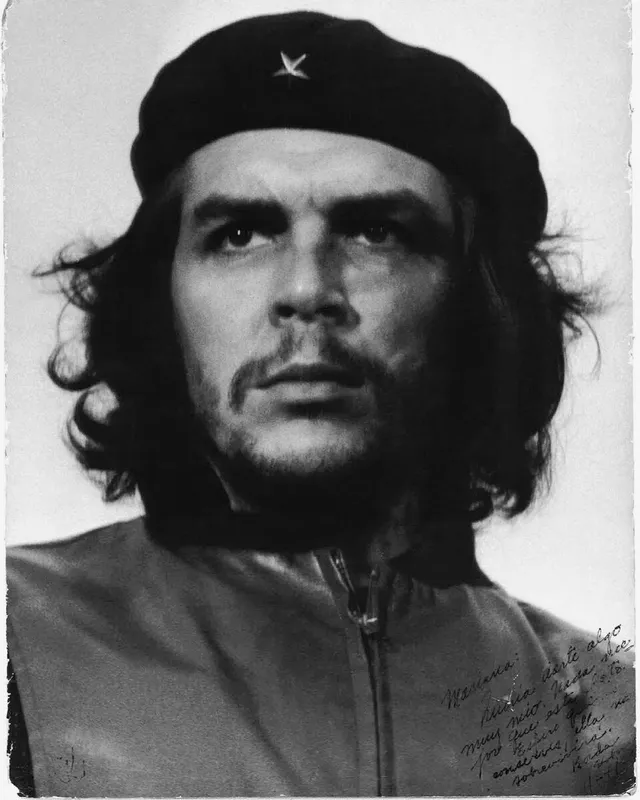
Portrait: Alberto Korda, 1960, via Wikimedia Commons (opens in a new tab) · Public domain
Che Guevara
- Country
- Argentina and Cuba
- Era
- 1928–1967
- Tradition
- Marxism-Leninism, guerrilla revolution
Argentine physician turned guerrilla commander in the Cuban Revolution, who theorised armed insurgency as an exportable method and was killed attempting it in Bolivia.
01
Documented positions
Documented positions come from the sources listed. Similarity is this project’s inference from those positions, and is a much weaker claim.
- Guerrilla warfare can create the conditions for revolution rather than waiting for them (Guerrilla Warfare, 1960)
- Rapid nationalisation and central planning as Cuba’s Minister of Industries
- Moral rather than material incentives for labour: the "new man" of socialist society
- Anti-imperialism as the organising principle of foreign policy (UN address, 1964)
- Presided over revolutionary tribunals at La Cabaña in 1959 that ordered executions
02
Where it sits on each dimension
Wealth and inequality
4
RedistributionMarket outcomes
Evidence: Well documented
The state in the economy
8
Active stateLimited state
Evidence: Well documented
Personal liberty
20
Collective orderIndividual freedom
Evidence: Well documented
Tradition and change
70
ContinuityReform
Evidence: Documented
Nation and the world
40
InternationalistNationalist
Evidence: Documented
Religion and the state
8
Secular stateReligion in public life
Evidence: Documented
Power and its limits
12
Concentrated authorityChecks and pluralism
Evidence: Well documented
Crime and punishment
14
PunishmentRehabilitation
Evidence: Well documented
Dimensions left unscored, for want of evidence: Environment and growth
Sources
- Che Guevara, Guerrilla Warfare · 1960
- Che Guevara, Address to the United Nations General Assembly · 1964
- Jon Lee Anderson, Che Guevara: A Revolutionary Life · 1997
Last verified: