Thinkers and political figures
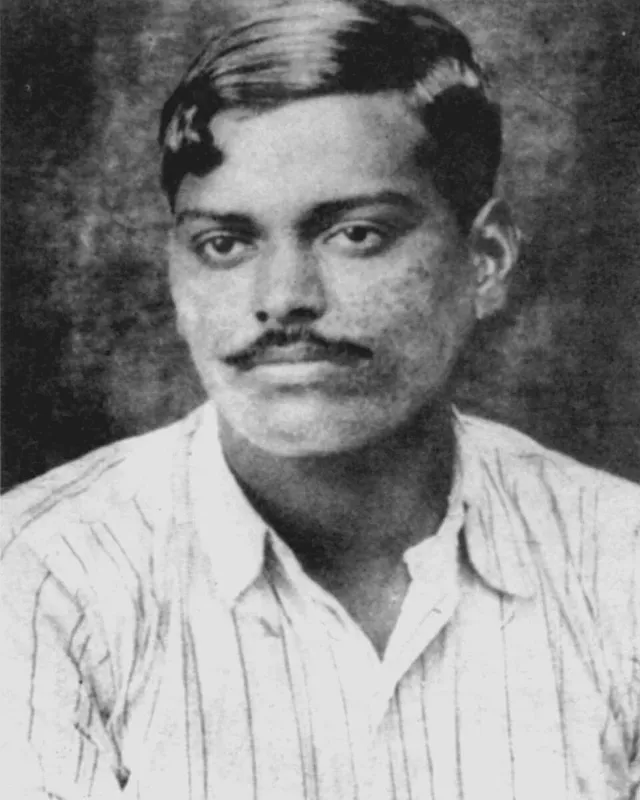
Portrait: Photograph, via Wikimedia Commons (opens in a new tab) · Creative Commons Attribution-ShareAlike 4.0
Chandra Shekhar Azad
- Country
- India
- Era
- 1906–1931
- Tradition
- Revolutionary socialism
Commander of the Hindustan Socialist Republican Association, who reorganised the revolutionary movement around an explicitly socialist programme and shot himself rather than be taken alive at twenty-four.
01
Documented positions
Documented positions come from the sources listed. Similarity is this project’s inference from those positions, and is a much weaker claim.
- Reorganised the Hindustan Republican Association as explicitly socialist, adding "Socialist" to its name in 1928
- Held that armed action was necessary because constitutional agitation had produced no transfer of power
- Planned the killing of the police officer held responsible for the assault that killed Lala Lajpat Rai
- Argued for a free India constituted as a socialist republic based on universal suffrage
- Rejected the Gandhian suspension of non-cooperation in 1922 as a betrayal of the mobilised population
02
Where it sits on each dimension
Wealth and inequality
10
RedistributionMarket outcomes
Evidence: Documented
Tradition and change
80
ContinuityReform
Evidence: Documented
Nation and the world
92
InternationalistNationalist
Evidence: Well documented
Dimensions left unscored, for want of evidence: The state in the economy, Personal liberty, Religion and the state, Power and its limits, Environment and growth, Crime and punishment
Sources
- Hindustan Socialist Republican Association, The Philosophy of the Bomb (HSRA manifesto) · 1930
- Manmath Nath Gupta, Bhagat Singh and His Times · Lipi Prakashan · 1977
Last verified: