Thinkers and political figures
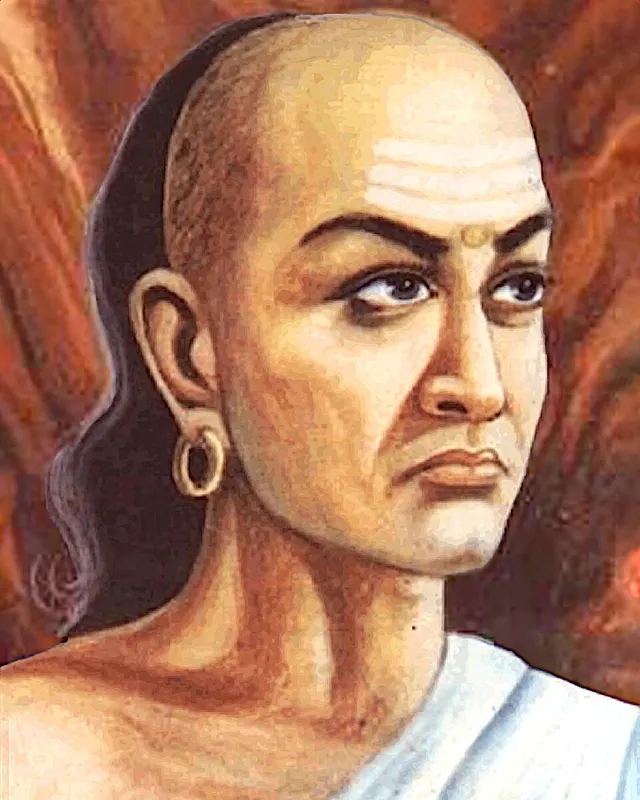
Portrait: Modern artistic depiction, via Wikimedia Commons (opens in a new tab) · Public domain
Chanakya
- Country
- Magadha, India
- Era
- c. 375–283 BCE
- Tradition
- Statecraft realism
Adviser credited with installing the Mauryan dynasty and with the Arthashastra, a manual of statecraft, espionage, taxation and war that treats the state’s interest as the governing consideration.
01
Documented positions
Documented positions come from the sources listed. Similarity is this project’s inference from those positions, and is a much weaker claim.
- Held that the king’s duty is the welfare of subjects, but that the state may use deception, surveillance and force to secure it
- Set out a detailed system of taxation, state-run industry and public works under royal control
- Advocated an extensive intelligence service directed at both foreign powers and the king’s own officials
- Formulated the mandala theory of foreign policy, in which a neighbour is a rival and a neighbour’s neighbour an ally
- Prescribed graded punishments fixed by law rather than left to the discretion of officials
02
Where it sits on each dimension
The state in the economy
20
Active stateLimited state
Evidence: Documented
Personal liberty
10
Collective orderIndividual freedom
Evidence: Documented
Nation and the world
88
InternationalistNationalist
Evidence: Documented
Power and its limits
8
Concentrated authorityChecks and pluralism
Evidence: Documented
Crime and punishment
14
PunishmentRehabilitation
Evidence: Documented
Dimensions left unscored, for want of evidence: Wealth and inequality, Tradition and change, Religion and the state, Environment and growth
Sources
- Attributed to Kautilya (Chanakya), Arthashastra · c. 300 BCE
- Patrick Olivelle, King, Governance, and Law in Ancient India · Oxford University Press · 2013
Last verified: